







What's Happening?
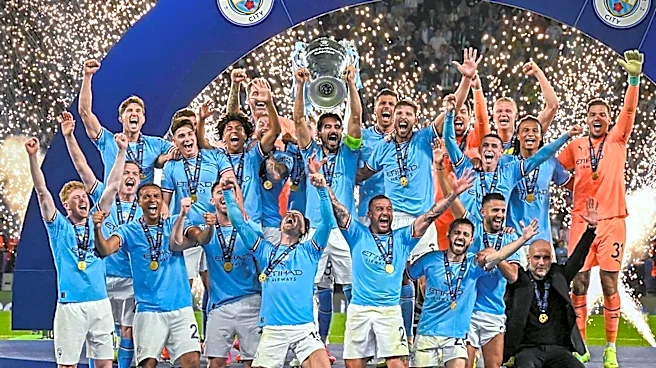
Apollo Global Management, a U.S. private capital group, has reportedly withdrawn a €2 billion (£1.5 billion) loan to the owners of Manchester City. This decision came in the final stages of discussions, following an independent commission's finding that
Manchester City was guilty of 114 finance-related breaches between 2009 and 2018. Former Manchester City financial adviser Stefan Borson stated that Apollo's credit committee would not have approved the investment after the guilty verdict. Borson also noted the existing relationship between Apollo and Mubadala, a large sovereign wealth investment fund out of Abu Dhabi, chaired by Manchester City's chairman, Khaldun Al Mubarak. Despite this relationship and Apollo's minority stake in Mubadala, the investment was deemed unfeasible due to the independent commission's findings. Manchester City has claimed innocence and submitted an appeal.
Why It's Important?
This withdrawal by a major U.S. investment firm like Apollo Global Management highlights the significant financial repercussions that can arise from regulatory breaches in international sports. The decision underscores the stringent due diligence processes and risk assessment protocols employed by U.S. financial institutions, especially when dealing with entities facing legal or regulatory challenges. For U.S. investors and pension funds, which often have underlying investments with firms like Apollo, this situation reinforces the importance of ethical governance and financial compliance in their portfolios. The incident could set a precedent for how U.S. capital markets evaluate investment opportunities in global sports organizations, particularly those under scrutiny for financial misconduct. It also demonstrates the potential for reputational damage and financial instability for sports clubs found in violation of financial regulations, impacting their ability to secure external funding.
What's Next?
Manchester City's appeal against the independent commission's verdict is pending, and the outcome will be crucial for the club's future financial and operational stability. The withdrawal of Apollo's loan could prompt other potential investors to exercise increased caution, potentially affecting the club's future funding avenues. The Financial Times' updates continue to fuel uncertainty regarding potential punishments for Manchester City. Additionally, the situation has led to discussions about the possibility of Manchester City's sponsors, Etihad and Etisalat, taking legal action against the Premier League board members for defamation, although Borson believes such a lawsuit against individual board members is unlikely to succeed. Premier League clubs have voted to cover the legal fees of board members should such action proceed, indicating a united front against potential legal challenges.
Beyond the Headlines
The incident extends beyond a simple loan withdrawal, touching upon the broader implications of financial fair play regulations in professional sports and the role of sovereign wealth funds in global investments. The involvement of Mubadala, a state-owned entity, and its relationship with a U.S. private capital group like Apollo, illustrates the complex web of international finance and sports ownership. The scrutiny on Manchester City's financial practices could lead to increased calls for transparency and stricter enforcement of financial regulations across global sports leagues. This case may also influence how U.S. investment firms assess the governance structures and financial health of international sports assets, potentially leading to a re-evaluation of risk in this sector. The interplay between sports governance, international finance, and legal challenges creates a multifaceted scenario with long-term implications for the integrity and financial landscape of professional football.