






What's Happening?
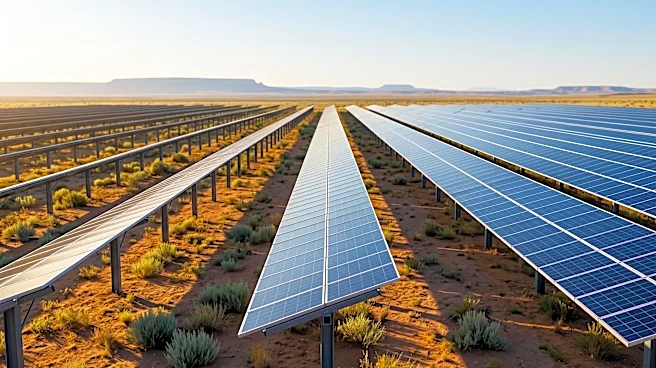
Tanya Engels, Partner at KPMG, and Mary-Jane Mayer, Senior Manager at KPMG, have critically examined the tax deductibility of grid connection asset costs for Independent Power Producers (IPPs) in South Africa. Their analysis focuses on the 1973 Palabora
Mining Company Limited v Secretary for Inland Revenue case, which IPPs have increasingly cited to support treating these costs as revenue in nature and thus deductible. Under South Africa’s electricity framework, Eskom is typically responsible for building and owning grid connection assets. However, due to capacity constraints, Eskom introduced a self-build policy in 2015, allowing IPPs to construct and fund these assets themselves, even though Eskom retains ownership. This ownership structure prevents IPPs from claiming capital allowances for these assets. Consequently, IPPs have explored deducting these costs as revenue expenditure under section 11(a) of the Income Tax Act, which permits deductions for expenditures incurred in income production and trade, provided they are not of a capital nature. The core issue is whether these costs are capital (part of establishing the income-earning structure) or revenue (ongoing operational costs).
Why It's Important?
The classification of grid connection costs as either capital or revenue expenditure has significant financial implications for IPPs in South Africa. If these costs are deemed capital, IPPs cannot claim tax deductions, increasing their overall project expenses and potentially impacting the viability of renewable energy projects. Conversely, if classified as revenue, IPPs can deduct these costs, reducing their tax burden and making renewable energy investments more attractive. The KPMG analysis highlights that relying on the Palabora case for this deduction is problematic. The Palabora case involved inducement payments for accelerating production, not the full construction cost of an asset, and the commercial context differed significantly. For IPPs, self-building grid connections is often a necessity rather than a choice, given Eskom's capacity limitations. This distinction is crucial because it affects the financial models and profitability of renewable energy projects, which are vital for South Africa's energy transition and economic development. The tax treatment directly influences investment decisions and the pace of renewable energy infrastructure development.
What's Next?
IPPs in South Africa will need to carefully consider the implications of the KPMG analysis regarding the tax deductibility of grid connection costs. Given the caution advised against relying on the Palabora case, IPPs may need to explore alternative strategies for managing these costs or advocate for legislative changes that specifically address the tax treatment of self-built grid connection assets. The South African government and tax authorities may need to provide clearer guidance or introduce amendments to the Income Tax Act to resolve this ambiguity. Without a definitive resolution, IPPs face continued uncertainty, which could impact future investment in renewable energy projects. This situation could lead to further discussions between the private sector, Eskom, and government bodies to establish a more favorable and predictable tax environment for critical infrastructure development in the renewable energy sector.
Beyond the Headlines
The debate over the tax treatment of grid connection costs for IPPs in South Africa underscores a broader challenge in infrastructure development and public-private partnerships. When public entities like Eskom face capacity constraints, private sector involvement becomes crucial, but the financial and regulatory frameworks must adapt to support these collaborations. The current situation highlights a disconnect between the operational realities of IPPs, who are compelled to self-build essential infrastructure, and the existing tax legislation, which does not adequately account for this unique arrangement. This can create unintended barriers to investment and hinder the country's progress towards its renewable energy goals. The ethical dimension arises from the expectation that IPPs bear significant costs for infrastructure that ultimately benefits the national grid, yet they are denied standard tax relief. A more equitable and forward-looking tax policy is essential to incentivize private investment in critical infrastructure, ensuring that the burden and benefits are appropriately distributed between public and private stakeholders.