


What's Happening?
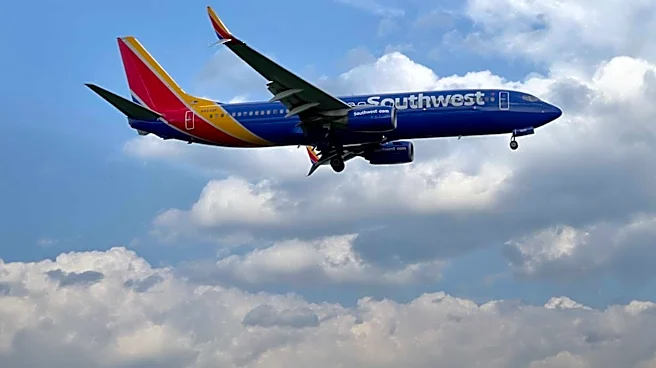
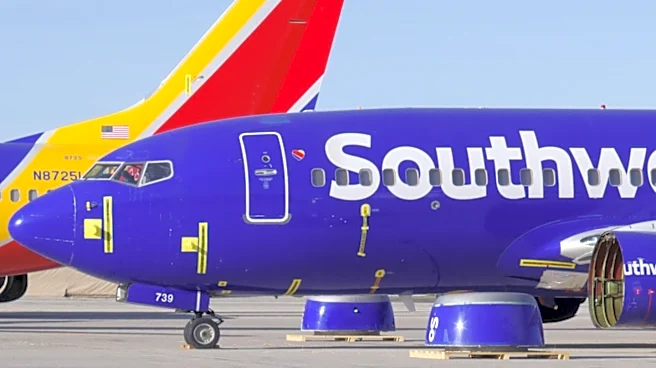
Southwest Airlines is set to introduce its inaugural airport lounge network, a strategic move aimed at enhancing its premium offerings and overall customer experience. The initial phase will see the opening of four lounges in late 2027 at key airports:
Austin-Bergstrom International Airport, Baltimore/Washington International Thurgood Marshall Airport, Daniel K. Inouye International Airport in Honolulu, and Nashville International Airport. Following this, at least seven additional locations are planned. This initiative is expected to bolster Southwest's Rapid Rewards loyalty program and attract higher-value customers. The airline also plans to launch a premium Southwest Rapid Rewards credit card in 2027 in partnership with Chase, which could further drive card adoption, customer engagement, and ancillary revenues.
Why It's Important?
This expansion into airport lounges signifies a notable shift in Southwest Airlines' business model, moving beyond its traditional low-cost carrier identity. By offering premium amenities, locally inspired dining, and travel benefits, Southwest aims to better compete with other airlines that already have established lounge networks. This strategic pivot could help the company attract and retain a more affluent customer base, thereby increasing its market share in the premium travel segment. The partnership with Chase for a new premium credit card is crucial, as it provides a direct channel to integrate lounge access with loyalty rewards, potentially boosting customer loyalty and generating significant ancillary revenue streams. This move could redefine customer expectations for budget airlines and intensify competition within the U.S. airline industry.
What's Next?
The initial four airport lounges are slated to open in late 2027, with more locations to follow. Concurrently, the premium Southwest Rapid Rewards credit card, developed in collaboration with Chase, is also expected to launch in 2027. Southwest Airlines will need to manage substantial investments and ensure successful execution across multiple locations to realize the full benefits of this initiative. The company will also need to navigate ongoing risks such as economic uncertainty, geopolitical developments, fuel-price volatility, labor matters, regulatory actions, and aircraft-delivery constraints, which could impact its financial performance and the success of its customer-experience investments. The market will be watching to see how this new offering impacts Southwest's competitive standing and financial results.
Beyond the Headlines
Southwest's foray into airport lounges represents a broader trend in the airline industry where carriers are increasingly looking to differentiate themselves through enhanced customer experiences, even those traditionally known for their low-cost models. This move could lead to a re-evaluation of what constitutes 'premium' travel and potentially blur the lines between budget and full-service airlines. The success of this venture could influence other low-cost carriers to consider similar upgrades, leading to an industry-wide shift in service offerings. Furthermore, the emphasis on locally inspired dining and travel benefits suggests a focus on creating a unique and personalized experience, which could set new standards for airport lounges and customer loyalty programs in the U.S. The long-term implications could include increased customer expectations for all airlines, driving further innovation in passenger services.