






What's Happening?
Dutch defense contractor Artillerie Inrichtingen Armaments (AIA) has announced a partnership with Israel Weapon Industries (IWI) to manufacture firearms for the European market and NATO alliance partners. AIA, based in Tilburg, will produce IWI’s Arad
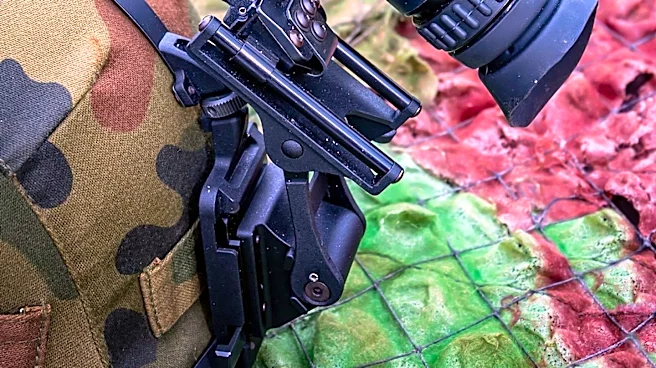
5 infantry rifle and the Negev UX light machine gun. These weapons are designed to incorporate IWI’s ARBEL technology, which can transform a soldier’s weapon into an advanced targeting system capable of shooting down drones. AIA CEO Gerard Zondervan stated that the partnership is purely a business transaction, despite ongoing conflict in the Gaza Strip and criticism from groups regarding collaborations with Israeli organizations. This deal comes amidst a backdrop of protests in the Netherlands by pro-Palestinian students demanding that institutions cut ties with Israeli entities, and a Dutch ban on exporting F-35 spare parts to Israel, upheld by the Supreme Court in October 2025. The Netherlands has also purchased 2 billion euros worth of Israeli defense products in recent years.
Why It's Important?
This collaboration signifies a strategic move to bolster the defense capabilities of European nations and NATO partners, potentially enhancing their ability to counter modern threats like drones. The integration of ARBEL technology into infantry rifles and light machine guns could provide a significant technological advantage on the battlefield. For AIA, this partnership expands its manufacturing portfolio and market reach within the defense sector. However, the deal also highlights the complex interplay between business interests and geopolitical sensitivities, particularly concerning the Israeli-Palestinian conflict. The decision by AIA to proceed despite public and political pressure underscores a business-first approach in the defense industry, potentially setting a precedent for other companies navigating similar ethical considerations. The ongoing protests and legal actions in the Netherlands reflect a broader societal debate within Europe regarding economic ties with Israel, which could influence future defense procurement decisions and international relations.
What's Next?
The manufacturing and distribution of the Arad 5 infantry rifle and Negev UX light machine gun for the European market and NATO partners will proceed as planned by AIA and IWI. This partnership may lead to increased adoption of IWI's advanced weapon systems, particularly those with anti-drone capabilities, across European militaries. It is possible that the deal could face continued scrutiny and protests from activist groups in the Netherlands and other European countries, potentially leading to further public debate or calls for government intervention. The success of this venture could also encourage other defense contractors to pursue similar international collaborations, potentially shifting dynamics within the global arms industry. The ongoing political and social climate in the Netherlands regarding ties with Israeli organizations will likely continue to evolve, potentially impacting future business decisions and government policies related to defense procurement.
Beyond the Headlines
The partnership between AIA and IWI extends beyond a simple business transaction, touching upon deeper ethical and geopolitical considerations. The CEO's statement about not getting involved in politics reflects a common stance in the defense industry, yet the nature of their products inherently places them within political and conflict contexts. This deal highlights the increasing demand for advanced weaponry capable of addressing evolving threats, such as drone warfare, which is reshaping modern military strategies. The controversy surrounding the partnership also underscores the growing influence of public opinion and activist movements on corporate decisions, even in sectors traditionally less susceptible to such pressures. The development of weapons with advanced targeting capabilities, like those incorporating ARBEL technology, raises questions about the future of warfare, the potential for increased automation in combat, and the ethical implications of such advancements. This collaboration could also be seen as a test case for how European defense industries balance economic opportunities with societal and political pressures related to international conflicts.