





What's Happening?
The Fort Worth Art Commission has unanimously approved two final designs for new public art installations during its September meeting. Artist Demarcus McGaughey, representing In House Media Group, presented his design for Fire Station #26 in District
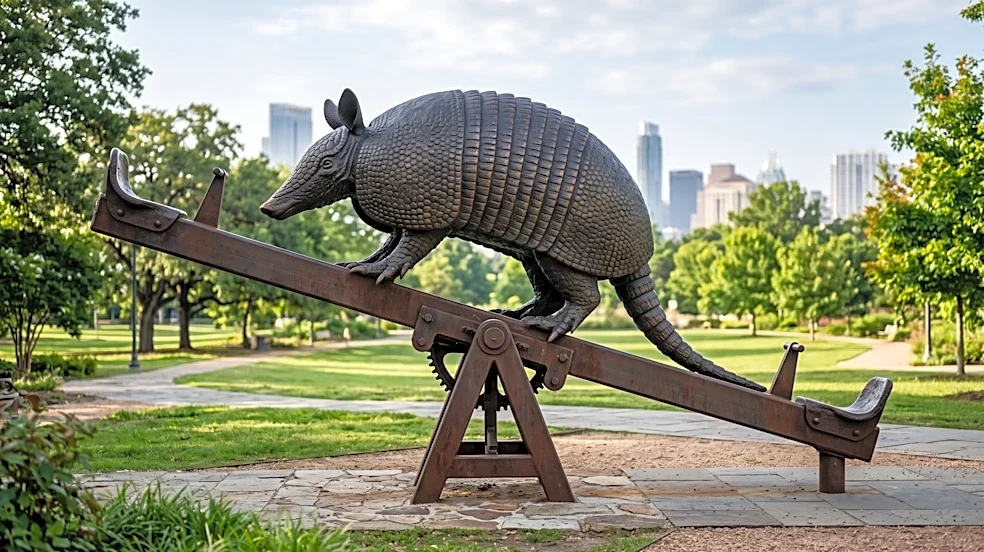
6. His proposal features a wall installation with an aluminum panel displaying a large white grid of neighborhood icons and firefighter symbols, designed to glow at night. Three metal firefighter figures will stand in the foreground, and a hidden belt buckle will serve as an 'Easter egg' nod to firefighter tradition. McGaughey also plans to host public events for residents to participate in color-by-number activities for the background grid. Separately, artist Trevor O’Tool presented his design for Gateway Park in District 11: an 11-foot-tall metal armadillo balanced on a giant seesaw. This sculpture, weighing over 2,000 pounds, underwent several prototypes to ensure its physics and structural integrity, including a saddle for visitors. Both designs received enthusiastic support from the commission and community members.
Why It's Important?
The approval of these public art projects signifies Fort Worth's continued investment in cultural enrichment and community engagement. Public art plays a vital role in shaping urban identity, fostering civic pride, and making public spaces more inviting and meaningful. The Fire Station #26 installation, with its community-sourced elements and symbolic firefighter imagery, aims to strengthen the connection between the fire department and the neighborhood, promoting a sense of security and belonging. The Gateway Park armadillo sculpture, with its whimsical nature and interactive element, is expected to become a landmark that draws visitors and enhances recreational experiences. These projects contribute to the local economy by commissioning artists and engaging local businesses for fabrication and installation. Furthermore, they reflect a commitment to integrating art into daily life, making it accessible to all residents and enhancing the city's aesthetic appeal. The unanimous approval also indicates strong consensus within the commission and community regarding the value and direction of public art initiatives.
What's Next?
Following the approval, both artists will proceed with the fabrication and installation of their respective public art pieces. Demarcus McGaughey will likely begin organizing the public color-by-number events to involve residents in the creation of the Fire Station #26 artwork. Trevor O’Tool will move forward with the construction and precise balancing of the large armadillo sculpture for Gateway Park. The Fort Worth Art Commission also unanimously approved the Public Art Fiscal Year 2027 Annual Work Plan, which includes 39 new and ongoing projects, indicating a robust pipeline of future public art initiatives. The commission will continue to oversee these projects, ensuring they adhere to design specifications and community expectations. Additionally, ongoing maintenance and repair of existing public art installations, such as the mosaic repairs for '35 City Blocks,' will continue to be a focus.
Beyond the Headlines
These public art installations represent more than just aesthetic additions; they are cultural investments that can have profound long-term impacts on community identity and social cohesion. The Fire Station #26 project, by incorporating community participation and symbols of local service, fosters a sense of collective ownership and appreciation for public safety. The Gateway Park armadillo, while whimsical, taps into Texas's unique cultural iconography, creating a memorable and engaging landmark that can become a point of local pride and a draw for tourism. Such projects often spark conversations about local heritage, environmental themes, and the role of art in public life. They also highlight the importance of public commissions in curating and supporting artistic talent, contributing to the cultural economy, and ensuring that public spaces are not merely functional but also inspiring and reflective of community values. The careful consideration of details, such as avoiding commercial endorsements in the Fire Station #26 design, underscores the ethical responsibilities of public art commissions.