






What's Happening?
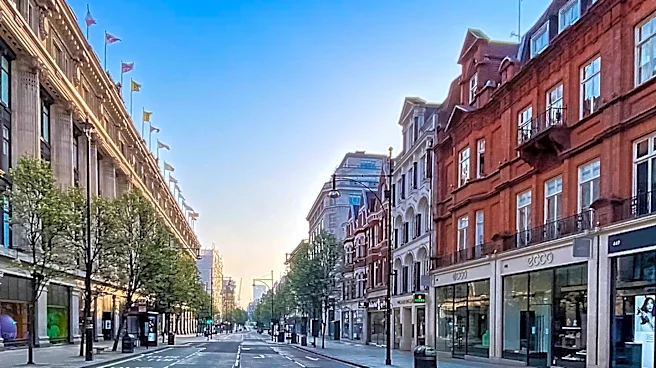
The initial week of Oxford Street's pedestrianization in London has significantly surpassed expectations, leading to substantial increases in visitor numbers, retail spending, and evening activity. Data from City Hall indicates a 16% rise in footfall
along the newly pedestrianized section between Orchard Street and Great Portland Street, compared to the same period in 2025. International tourism in the area saw a 42% year-on-year increase, while visits after 6 PM climbed by 19%, suggesting an extension of activity beyond traditional shopping hours. Payment provider Adyen reported a 28% uplift in consumer spending at participating retailers, from approximately £2.9 million to £3.7 million, with in-store transactions rising by 19%. Transport for London also noted increased activity at nearby stations like Oxford Circus and Bond Street, with footfall outside Bond Street station reaching up to 46% above average weekday levels. These positive results occurred despite major construction works being delayed until after the Christmas trading period to minimize disruption. Since October 26, private motor vehicles, buses, taxis, private hire vehicles, cycles, scooters, and pedicabs have been removed from this section of Oxford Street, marking the first phase of a broader regeneration program.
Why It's Important?
The successful pedestrianization of Oxford Street holds significant implications for urban planning and retail sectors globally, serving as a potential case study for large-scale high street renewal programs. The immediate economic benefits, including increased footfall and consumer spending, demonstrate the potential for such initiatives to revitalize urban commercial centers. For retailers, especially those preparing for the critical Christmas shopping season, these early results provide an encouraging outlook on the economic impact of creating traffic-free shopping destinations. The rise in international tourism and extended evening activity suggests that pedestrianization can enhance a location's appeal as a comprehensive destination, fostering a more vibrant urban environment. This model could influence other major cities considering similar transformations to combat declining high street activity and attract both local and international visitors, ultimately boosting local economies and supporting businesses.
What's Next?
The initial success of Oxford Street's pedestrianization is expected to pave the way for the next phases of its wider regeneration program. Major construction works, intentionally delayed until after the Christmas trading period, are anticipated to commence, further transforming the area into a world-class destination. This broader program aims to integrate retail with culture, hospitality, leisure, and modern workplace spaces, positioning Oxford Street alongside iconic global destinations like Times Square and the Champs-Élysées. Local government leaders, transport planners, and regeneration professionals will closely monitor the ongoing results as a benchmark for future pedestrianization projects across the UK and potentially internationally. The Mayor of London, Sadiq Khan, has encouraged visitors to experience the traffic-free Oxford Street, indicating continued promotional efforts to sustain the momentum and attract more people to the area, especially during the festive season.
Beyond the Headlines
The transformation of Oxford Street extends beyond immediate economic gains, touching upon broader urban development philosophies and the evolving role of city centers. This initiative reflects a growing global trend towards prioritizing pedestrian experiences and sustainable urban mobility over vehicular traffic in commercial districts. The success here could accelerate similar projects, leading to a re-evaluation of urban infrastructure and public space design in major cities worldwide. Ethically, it highlights a shift towards creating more human-centric urban environments, potentially improving air quality, reducing noise pollution, and fostering a stronger sense of community and public safety. Culturally, a pedestrianized Oxford Street could evolve into a more dynamic public space for events, art installations, and social gatherings, enriching the urban fabric beyond its traditional retail function. This long-term shift could redefine how city centers are perceived and utilized, moving towards more integrated, livable, and environmentally conscious urban landscapes.