

What's Happening?
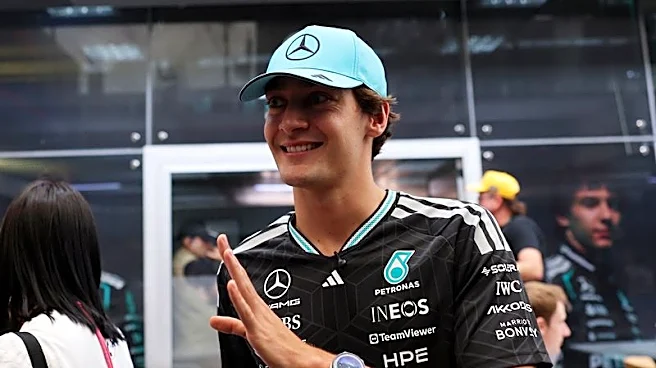
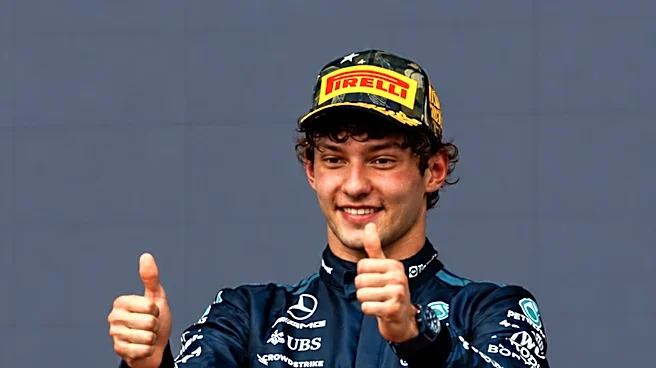
Mercedes driver George Russell has voiced his frustration over what he describes as 'atrocious luck' during the 2026 Formula 1 season, following his teammate Kimi Antonelli's championship victory. Russell, who finished fourth in the standings behind Max
Verstappen and Lewis Hamilton, experienced numerous technical issues throughout the season. A software glitch at the Mexico City Grand Prix, where he qualified second, caused him to lose several positions on the opening lap, marking the latest in a series of setbacks. Russell stated that out of 20 races, he had issues in 14, a significant increase compared to previous seasons. He questioned whether these frequent problems were merely bad luck or indicative of underlying issues the team needs to address. Russell was excused from media obligations after the Mexico race, with team principal Toto Wolff noting he was 'distraught.'
Why It's Important?
George Russell's public questioning of his team's reliability and his 'atrocious luck' highlights the immense pressure and high stakes within Formula 1. His comments could signal internal tensions within the Mercedes team, especially as his teammate Antonelli secured the championship. This situation underscores how technical reliability is as critical as driver performance in F1, and how a lack of it can significantly impact a driver's season and morale. Russell's experience also brings to light the psychological toll on athletes when external factors repeatedly hinder their performance. His call for the team to 'question' the frequency of issues suggests a need for a thorough internal review, which could lead to significant operational or technical changes within Mercedes to ensure competitive parity and reliability for both drivers.
What's Next?
Russell's comments are likely to prompt internal discussions within Mercedes regarding the consistency and reliability of their cars. The team will need to address his concerns to maintain team cohesion and ensure both drivers feel supported and have equal opportunities for success in the upcoming seasons. The remaining races of the current season, including the Sao Paulo Grand Prix, will be crucial for Russell to try and regain some momentum and confidence, despite his low expectations. His performance and any further technical issues will be closely scrutinized. Mercedes' response to Russell's frustrations, both publicly and internally, will be key in shaping their strategy and team dynamics for the 2027 season.
Beyond the Headlines
Russell's situation offers a glimpse into the complex dynamics of a two-driver team in a highly competitive sport. While Antonelli's success is celebrated, Russell's struggles highlight the potential for internal friction when one driver consistently faces technical disadvantages. This scenario can lead to questions about resource allocation, development priorities, and overall team management. The concept of 'luck' in F1 often masks deeper engineering or operational challenges, and Russell's insistence on questioning it suggests a desire for accountability beyond simple misfortune. His experience could also spark broader conversations within motorsport about mental health and the support systems available to athletes dealing with prolonged periods of underperformance due to factors outside their control.