




What's Happening?
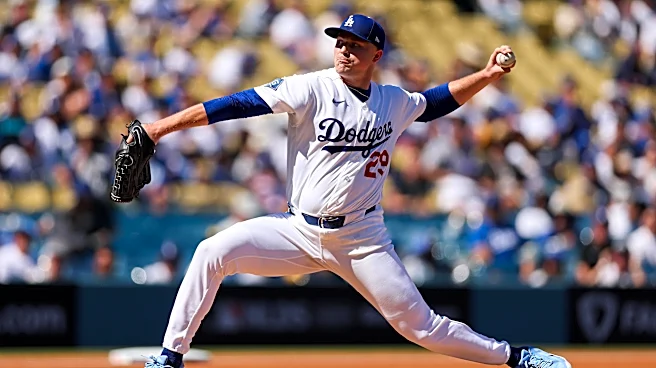
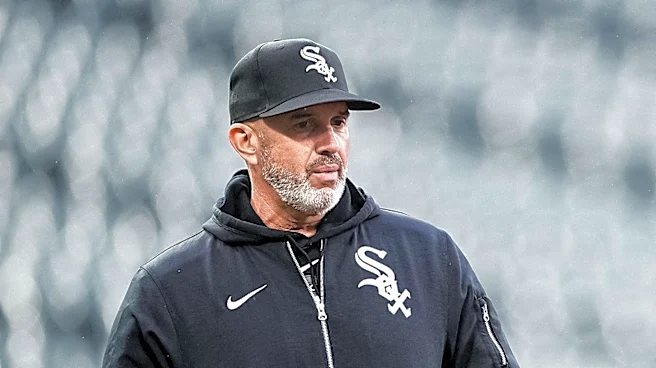
The Chicago White Sox are transitioning their relief ace, Grant Taylor, to the starting rotation for the upcoming 2027 season. This decision was announced by General Manager Chris Getz during an MLB Network interview. Taylor, 24, had a dominant 2026 season in the bullpen,
striking out 106 batters in 84 innings with a 2.25 ERA. He also pitched 8 ⅔ innings during the White Sox's postseason run. The move comes as Taylor's workload in 2026, including a four-inning appearance in Game 1 of the American League Division Series, demonstrated his capacity for increased innings, aligning with a preseason goal to build him up for a starting role. Left-hander Hagen Smith, who impressed with a 1.29 ERA and 41 strikeouts in 28 innings after being called up in August, will remain in the bullpen.
Why It's Important?
This strategic shift by the White Sox signifies a significant change in their pitching staff dynamics and could have a substantial impact on their performance in the 2027 season. Moving a proven relief ace like Taylor to the starting rotation indicates the team's belief in his potential to be a front-line starter, potentially providing a much-needed boost to a rotation that has lacked impact outside of Sean Burke's best stretches. However, it also creates a void in the bullpen, as Taylor was their most trusted reliever in 2026. The success of this move hinges on Taylor's ability to maintain his effectiveness over a larger number of innings and the team's capacity to find a new high-leverage reliever. This decision reflects a calculated risk to optimize their pitching talent, potentially elevating their competitive standing but also introducing new challenges in bullpen management.
What's Next?
The White Sox will now focus on finding a replacement for Taylor's crucial role in the bullpen, which was a key component of their 2026 postseason run. Simultaneously, the team will monitor Taylor's transition to a starting role, particularly given his past injury history and lighter track record for logging heavy innings. Despite Taylor's move, the team is still actively pursuing additional starting pitching as a top priority, indicating a broader strategy to strengthen their rotation. The performance of both Taylor as a starter and the new bullpen configuration will be closely watched as the 2027 season approaches, with significant implications for the team's overall success and future roster decisions.
Beyond the Headlines
The decision to convert a dominant reliever into a starter often carries both high reward and high risk. While Taylor possesses a high-90s fastball with unique riding action and a suite of breaking balls, his ability to sustain this elite performance over a full season as a starter, especially with a history of injuries, will be a critical test. This move could set a precedent for how the White Sox develop and utilize their pitching talent, potentially influencing future player development strategies across MLB. The success or failure of this transition could also impact the team's long-term financial commitments to pitching, as successful starters typically command higher salaries than relievers. It highlights the ongoing strategic challenge for baseball organizations to balance immediate competitive needs with long-term player development and injury management.