







What's Happening?
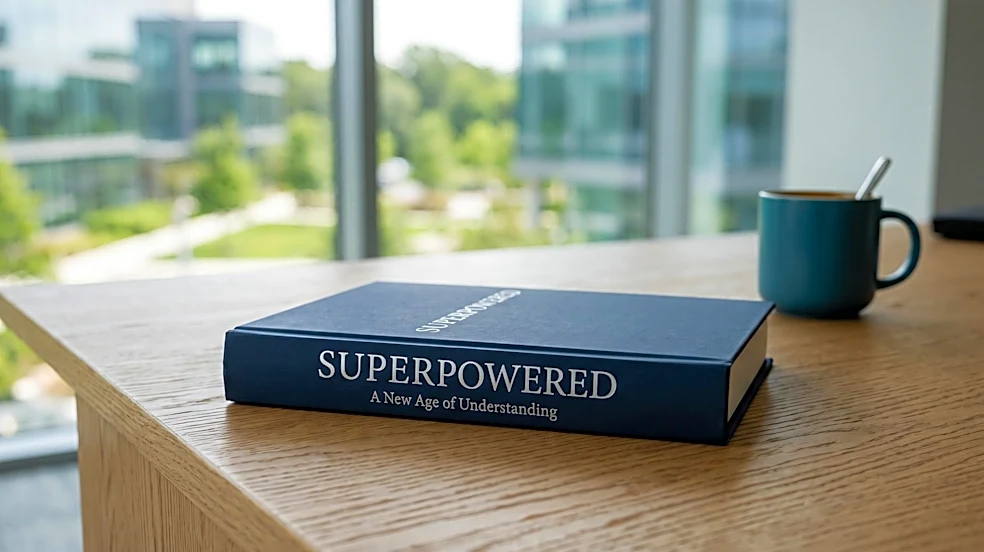
A new book titled 'Superpowered, how AI Unlocks The Power of People, Leadership and Teams' has been launched, aiming to provide a clear understanding of artificial intelligence and its potential to enhance human contribution in the workplace. Authored
by Josh Bersin, the book is based on over 100 case studies and extensive research into organizations and careers. It introduces frameworks, examples, and practical guidance for individuals and companies to adapt to AI, positioning it as a 'teammate' rather than merely a tool. The book is designed for a broad audience, including human resources professionals, people managers, business leaders, and anyone preparing for the future of work, without requiring prior AI expertise. It emphasizes preserving the employee experience and human contribution while leveraging AI for improved customer satisfaction, employee retention, and business agility.
Why It's Important?
The release of 'Superpowered' is significant for U.S. businesses and the workforce as it offers a roadmap for integrating AI in a way that prioritizes human advantage. In an era where AI is rapidly transforming industries, this book provides a critical perspective on how companies can redesign their operating models to optimize what people do best. By focusing on AI as a means to create more capable workers and denser talent, it challenges the notion that AI will primarily lead to job displacement. This approach can foster a more innovative, productive, and humane workplace, potentially leading to stronger economic growth and improved competitiveness for U.S. companies. The insights from 'Superpowered' could influence how organizations invest in technology, develop their workforce, and structure their operations, ultimately shaping the future of work in the United States.
What's Next?
Following the launch of 'Superpowered,' businesses and professionals are expected to engage with its frameworks and guidance to navigate the evolving landscape of AI integration. The book's emphasis on redesigning work to amplify human potential suggests a shift in how companies might approach AI adoption, moving beyond simple automation to more strategic human-AI collaboration. This could lead to increased investment in training programs that equip employees with AI-related skills and a greater focus on organizational change management to facilitate this transition. Business leaders, particularly in human resources and management, may use the book's insights to develop new strategies for talent development, employee engagement, and operational efficiency. The ideas presented could also spark further discussions and research into the ethical and practical implications of AI in the workplace.
Beyond the Headlines
Beyond the immediate practical applications, 'Superpowered' delves into the deeper implications of AI on the human element of work. It addresses the ethical dimension of technology integration by advocating for the preservation of employee experience and human contribution, rather than solely focusing on efficiency gains. This perspective is crucial in preventing a purely transactional view of AI adoption and instead promoting a more holistic approach that values human potential. The book's influence could extend to shaping cultural norms around technology in the workplace, encouraging a mindset where AI is seen as an enabler of human creativity and problem-solving. This could lead to a long-term shift in how society perceives the relationship between humans and advanced technology, fostering a more collaborative and less adversarial view of AI's role in our professional lives.