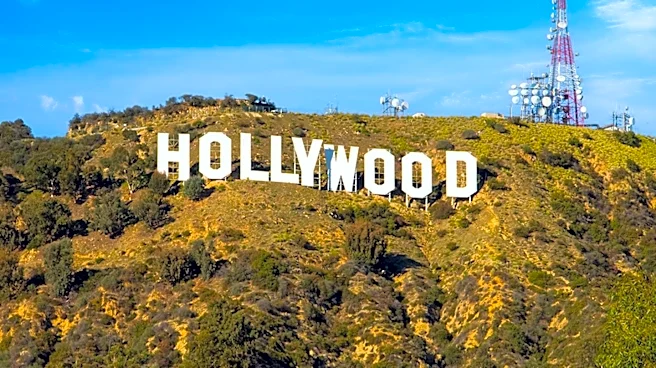








What's Happening?
Los Angeles, once the undisputed center of the entertainment industry, is experiencing a severe decline in film and television production, with activity plummeting to historic lows. According to FilmLA, shoot days for feature films and TV productions
in the L.A. region fell by 20% and 30% respectively in the second quarter of this year, compared to already weak levels from a year ago. This downturn is attributed to a combination of factors, including the lingering effects of the COVID-19 pandemic, back-to-back labor strikes by writers and actors, and fierce competition from other states and countries offering more attractive tax incentives. Despite improvements to California's tax incentive program, Los Angeles continues to struggle to retain productions, leading to significant job losses—approximately 57,000 in the past four years—and the closure of over 80 film and television production services businesses since 2022.
Why It's Important?
The exodus of film and TV production from Los Angeles has profound economic and cultural implications for the city and the broader U.S. entertainment industry. L.A.'s signature industry, which has historically been a major employer and economic driver, is facing an existential crisis. The loss of jobs impacts not only actors and crew members but also a vast ecosystem of support businesses, from catering to equipment rentals. This shift also signifies a decentralization of Hollywood, with other regions gaining prominence as production hubs. The competition from states and countries offering substantial tax credits highlights a critical policy challenge for California: how to remain competitive without engaging in a 'race to the bottom' on incentives. The decline also affects the cultural identity of Los Angeles, as its role as the primary creative center for film and television diminishes.
What's Next?
California Governor Gavin Newsom's plan to more than double funding for the film and TV tax credit program to $750 million annually, while a significant increase, still faces challenges in competing with other regions that offer larger and more flexible incentives, including those that cover actors' salaries. The city of Los Angeles is also considering appointing a film commissioner to advocate for the industry and streamline permitting processes, which are currently complex and costly. However, the long-term trend suggests that the industry's shift away from L.A. is deeply entrenched, driven by economic realities and established infrastructure in other locations. Future efforts will likely focus on making L.A. more cost-effective and efficient for productions, but a full return to its former dominance appears unlikely, as other regions have developed skilled crews and facilities.
Beyond the Headlines
The decline of Hollywood's production base in Los Angeles is a complex narrative of economic forces, political decisions, and global competition. It underscores how even established industries can be disrupted by changing market dynamics and policy choices. The initial complacency in L.A., assuming its inherent status as the entertainment capital, allowed other regions to build their own film industries. This situation raises questions about the role of government incentives in shaping industrial landscapes and the balance between economic development and fiscal responsibility. The outsourcing of critical components like visual effects and musical scoring further fragments the industry's ecosystem. The long-term cultural impact could be a more diverse geographic representation in filmmaking, but also a potential loss of the unique creative synergy that historically defined Hollywood.