



What's Happening?
Subaru has revealed initial details of its proprietary electric vehicle (EV) platform, marking a significant step towards developing its own EV technology independently. The company showcased a test mule, based on an Outback, featuring two electric motors
that deliver approximately 510 horsepower and all-wheel drive. These new motors, developed with Aisin, are more compact and lighter, boasting 30% greater efficiency than the industry average. Additionally, Subaru is collaborating with Panasonic Energy on a new battery pack comprising 4000 cylindrical cells, which is projected to be 25% lighter than previous Subaru batteries and aims for a 20% higher energy density than the industry average. This new platform will also incorporate safety enhancements, including a redesigned front section to better protect passengers and the battery during a crash, and a front motor engineered to rotate upon impact to mitigate forces. The entire platform is expected to be around 220 pounds lighter than existing ones. This move signifies Subaru's effort to establish its distinct identity in the EV market, moving beyond its current reliance on Toyota for powertrain development.
Why It's Important?
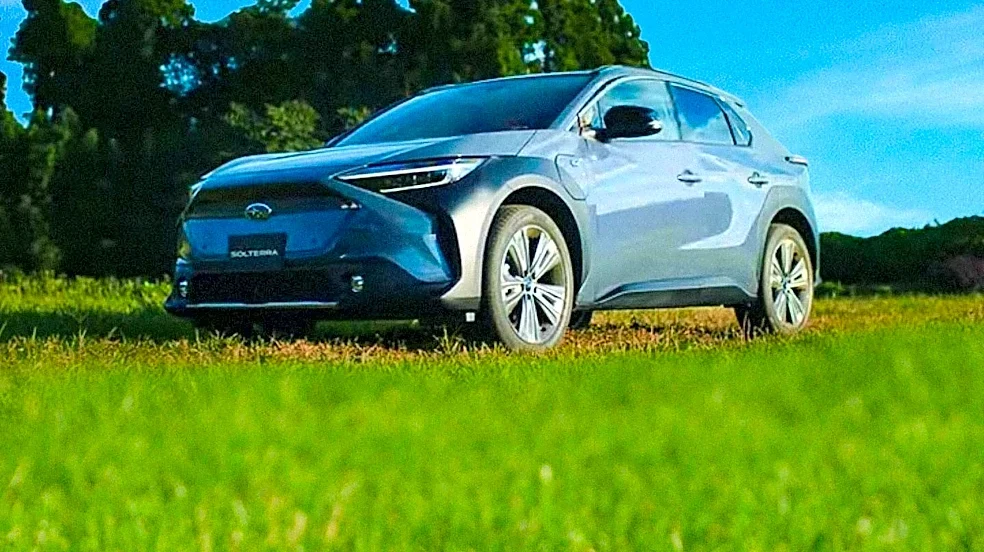
This development is crucial for Subaru as it seeks to differentiate itself in the rapidly evolving U.S. electric vehicle market. By developing an in-house EV platform, Subaru aims to infuse its unique brand DNA, particularly its renowned all-wheel-drive capabilities and advanced safety systems, into its electric offerings. This strategic shift could enhance Subaru's competitiveness against major players like Tesla, Volkswagen, and General Motors, who are also heavily investing in EV technology. For U.S. consumers, this could mean a broader range of EV options that align with Subaru's reputation for ruggedness and safety. The focus on lighter, more efficient motors and higher energy density batteries could lead to EVs with improved performance and range, addressing common consumer concerns about electric vehicles. Furthermore, the emphasis on safety improvements in the new platform could set new benchmarks for EV design, potentially influencing industry standards and consumer expectations for vehicle safety.
What's Next?
While Subaru executives have not provided a specific timeline for the full rollout of their in-house EVs, they indicated that some of these new technologies will begin reaching customers starting in 2029. This suggests a phased introduction of vehicles incorporating elements of the new platform. In the interim, Subaru will likely continue to offer its current EV lineup, which largely relies on collaborations with Toyota. The company is also working on more efficient combustion engines for future gasoline and hybrid models, indicating a dual strategy to cater to both traditional and electric vehicle markets. Additionally, Subaru plans to introduce a next-generation EyeSight driver-assistance system, which will integrate artificial intelligence and a new electronic control unit, further enhancing its safety features. The coming years will likely see more detailed announcements regarding specific EV models and their market availability as Subaru progresses with its independent EV development.
Beyond the Headlines
Subaru's decision to develop its own EV platform reflects a broader trend among smaller automotive manufacturers to assert their independence and brand identity in the face of industry-wide electrification. While collaborations, such as Subaru's with Toyota, offer advantages in terms of shared R&D costs and accelerated market entry, they can dilute a brand's unique selling propositions. By investing in its own technology, Subaru is not just building electric cars; it's safeguarding its engineering philosophy and market position. This move could also have long-term implications for the automotive supply chain, as Subaru's partnerships with companies like Aisin for motors and Panasonic Energy for batteries highlight the complex ecosystem supporting EV production. The emphasis on 'Subaru DNA' in its EVs suggests a strategic effort to appeal to its loyal customer base, who value the brand's distinct characteristics. This could lead to a more diverse and specialized EV market, where consumers have choices that extend beyond generic electric powertrains to vehicles that embody specific brand values and engineering philosophies.