
What's Happening?
Brent crude oil prices have surged to $100 a barrel for the first time since May, following reports of Houthi attacks on vessels in the Red Sea. The attacks have raised concerns about potential disruptions
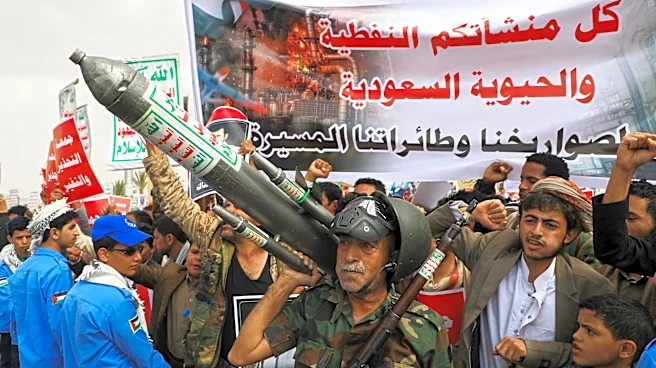
to global energy supplies. The Red Sea is a critical shipping route, and the Houthi attacks have sparked fears of further supply chain disruptions. The situation is exacerbated by ongoing tensions between the U.S. and Iran, with recent breakdowns in peace talks and renewed hostilities in the Strait of Hormuz. The Houthis, an Iranian-backed group, claimed responsibility for the attacks, alleging violations of their maritime blockade against Saudi Arabia. The situation has led to significant increases in oil prices, with Brent crude rising by 7.1% and West Texas Intermediate crude jumping 5.3%.
Why It's Important?
The rise in oil prices due to the Red Sea attacks underscores the fragility of global energy markets in the face of geopolitical tensions. The Red Sea and the Bab el-Mandeb Strait are vital for global oil trade, and any disruption could have far-reaching economic consequences. Higher oil prices can lead to increased costs for consumers and businesses, potentially slowing economic growth. The situation also highlights the complex geopolitical dynamics in the Middle East, with the U.S., Iran, and their allies involved in a tense standoff. The involvement of the Houthis, an Iran-backed group, adds another layer of complexity, as it could lead to broader regional conflicts. The potential for further disruptions in oil supply could also impact global energy markets and lead to increased volatility.
What's Next?
The situation in the Red Sea is likely to remain volatile, with potential for further attacks and disruptions in oil supply. Diplomatic efforts may be needed to de-escalate tensions and ensure the security of vital shipping routes. However, the involvement of multiple parties, including the U.S., Iran, Saudi Arabia, and the Houthis, complicates the prospects for a quick resolution. The U.S. and its allies may increase military presence in the region to protect shipping routes, while diplomatic efforts may focus on reducing hostilities and ensuring the free flow of oil. The situation will require careful monitoring, as any escalation could have significant implications for global energy markets and geopolitical stability.