



What's Happening?
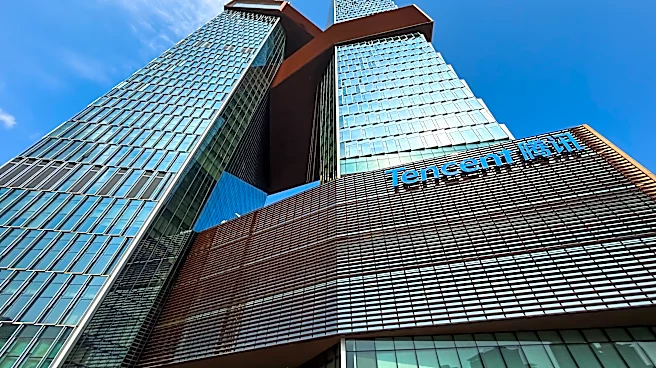
Pony Ma (Ma Huateng), founder, chairman, and CEO of Tencent, has announced his intention to reallocate half of the company's workforce to AI-native businesses. This declaration was made during his annual speech to employees on November 11, marking the company's 28th
anniversary. Ma utilized a military metaphor, suggesting that one half of the personnel would act as an 'army' to defend and enhance the efficiency of core businesses using AI, while the other half would serve as a 'navy' to explore and build new AI-native products and growth areas. This move is described as an organizational change to adapt to the AI era, rather than a layoff target. Following the speech, false rumors of mass layoffs circulated on Chinese social media, which Tencent's public relations director, Zhang Jun, quickly refuted as a misunderstanding. Tencent has not yet disclosed specific timelines, affected units, or new capital expenditure targets related to this initiative. The company had approximately 115,927 employees as of June 30, 2026.
Why It's Important?
This strategic shift by Tencent, a major global technology company, underscores the profound impact of artificial intelligence on corporate structures and workforce planning. By reallocating a significant portion of its staff to AI-native ventures, Tencent aims to proactively position itself at the forefront of AI innovation, potentially setting a precedent for other large tech firms. This move could lead to a redefinition of job roles, skill requirements, and organizational hierarchies within the tech industry. For the U.S. tech sector, Tencent's aggressive embrace of AI-driven restructuring could intensify global competition in AI development and application. It highlights a growing trend where companies are not just integrating AI into existing operations but are fundamentally reorganizing to create new AI-centric businesses. This could influence investment decisions, talent acquisition strategies, and the overall pace of AI adoption across various industries, as companies strive to remain competitive in a rapidly evolving technological landscape.
What's Next?
Tencent is expected to provide more clarity on its AI-driven organizational restructuring in the coming months. The company's third-quarter results, scheduled for release on November 18, may offer additional insights into its employee figures and management's commentary on the reorganization. This initiative will likely involve significant internal training and upskilling programs to prepare employees for new AI-focused roles. The success of this 'army and navy' strategy will depend on Tencent's ability to effectively transition its workforce, foster innovation in AI-native products, and manage potential internal resistance to change, particularly from middle management. Other tech companies, both in China and globally, will be closely observing Tencent's implementation and outcomes, potentially influencing their own AI integration and workforce strategies. The emphasis on flatter, more agile teams and empowering frontline employees suggests a broader shift in corporate culture towards greater adaptability and initiative in the AI era.
Beyond the Headlines
Tencent's move reflects a deeper philosophical shift in how large corporations perceive and respond to disruptive technologies like AI. The 'life or death' rhetoric used by Pony Ma suggests a recognition that incremental changes are insufficient to maintain relevance in a rapidly advancing AI landscape. This restructuring could lead to a re-evaluation of traditional corporate hierarchies, particularly the role of middle management, as AI tools enable more direct and efficient workflows. The emphasis on 'AI-native' businesses implies a future where AI is not merely a tool but the foundational element of new products and services, potentially leading to entirely new market segments and business models. This development also raises questions about the future of work, the skills required for the next generation of employees, and the ethical implications of AI-driven workforce transformations. The challenge for Tencent, and indeed for any company undertaking such a transformation, will be to balance innovation with employee well-being and to ensure that the pursuit of technological advancement aligns with broader societal values.