


What's Happening?
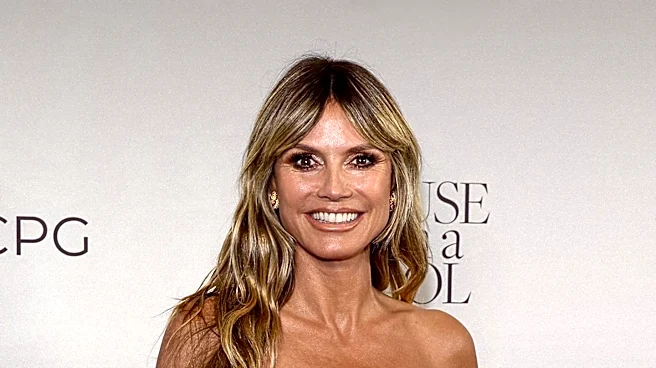
Heidi Klum is featured in a new campaign for the fashion brand s.Oliver, titled 'Casual Since Forever.' The campaign uniquely brings together the present-day supermodel with a younger, 1990s version of herself through the use of artificial intelligence.
This concept is central to the campaign's video and imagery, where both versions of Klum interact. The 1990s setting is significant as it marks the decade when Klum began her career. s.Oliver aims to reinforce its position as a casual wear brand by connecting Klum's personal history and enduring style with its own brand evolution. The campaign promotes s.Oliver's Vintage Collection, which reinterprets 90s fashion elements like sportswear-inspired looks, loose fits, denim, sweatshirts, T-shirts, and prominent logos for a contemporary audience. Klum serves as the brand face for this campaign, not as a designer of the collection.
Why It's Important?
This campaign highlights the growing trend of using advanced AI in advertising to create novel and engaging narratives. By digitally reconstructing a younger Heidi Klum, s.Oliver is pushing the boundaries of how brands can leverage technology to tell compelling stories and connect with consumers on an emotional level. The campaign's focus on nostalgia, specifically the 1990s, taps into a popular cultural trend, aiming to resonate with consumers who appreciate vintage aesthetics. For s.Oliver, this strategy is crucial for sharpening its brand identity in a competitive fashion market and driving sales for its Vintage Collection. The use of a globally recognized figure like Heidi Klum, combined with innovative AI visuals, is designed to generate significant media attention and consumer interest, potentially influencing how other brands approach celebrity endorsements and digital content creation in their marketing efforts.
What's Next?
The s.Oliver 'Casual Since Forever' campaign is expected to continue its rollout across various media platforms, including online, social media, and potentially print. The brand will likely monitor consumer engagement and sales performance of the Vintage Collection to assess the campaign's effectiveness. Other fashion brands may observe this campaign's success to evaluate the potential of integrating AI-generated content and nostalgic themes into their future marketing strategies. The discussion around the authenticity of AI-created pasts in advertising is also likely to continue, prompting further conversations about ethical guidelines and transparency in digital marketing. Future developments could include more brands experimenting with similar AI techniques to feature historical figures or younger versions of celebrities, pushing the creative boundaries of advertising.
Beyond the Headlines
The s.Oliver campaign featuring two versions of Heidi Klum raises deeper questions about authenticity and perception in the age of AI. While the campaign explicitly labels the younger Klum as AI-generated, it blurs the lines between historical reality and digitally constructed narratives. This approach challenges consumers to critically evaluate the images they consume, especially when they evoke nostalgia or personal history. Ethically, the use of AI to recreate individuals, even with their consent, opens discussions about digital identity, the manipulation of imagery, and the potential for AI to create 'fake' historical moments. Culturally, it reflects a broader societal fascination with the past and the desire to revisit or reimagine it through technological means. This trend could lead to a shift in how we perceive celebrity endorsements, moving towards more technologically immersive and creatively ambitious campaigns that redefine the relationship between brands, celebrities, and their audiences.