




What's Happening?
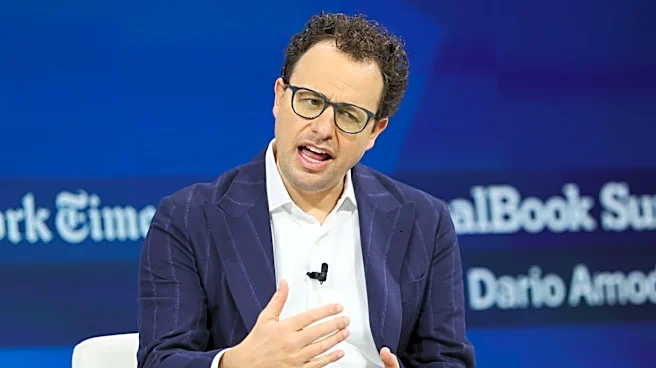
Dario Amodei, CEO of Anthropic, has made a significant claim that within a decade, major diseases such as cancer, Alzheimer's, heart disease, and mental illness could become 'relics of the past' due to advancements in artificial intelligence. This optimistic
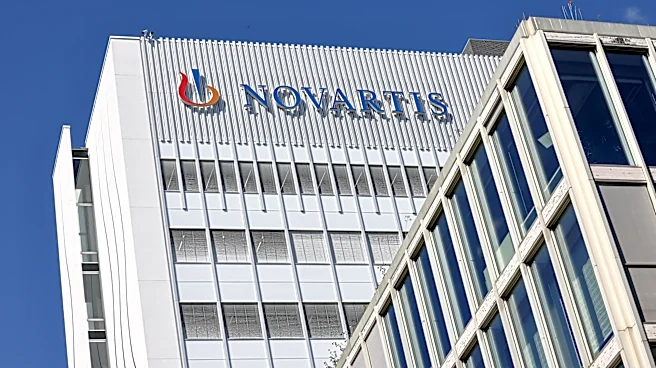
outlook suggests a rapid transformation in healthcare through AI. However, this perspective has been met with skepticism from established figures in the biopharmaceutical industry. CEOs like Vas Narasimhan of Novartis and David Ricks of Eli Lilly, along with Sanofi's Head of Global R&D, Paulo Fontoura, have expressed more cautious views. They acknowledge AI's potential in operational and informational aspects of drug development but emphasize the inherent complexity of human biology and the rigorous regulatory processes required for new treatments. These industry leaders suggest that while AI can aid in target identification and development optimization, randomized clinical trials and a deep understanding of disease biology remain critical bottlenecks, making such rapid eradication of diseases unlikely within Amodei's proposed timeframe.
Why It's Important?
The differing perspectives between AI proponents like Dario Amodei and biopharma industry leaders highlight a crucial debate regarding the realistic timeline and scope of AI's impact on healthcare. Amodei's predictions, if realized, would revolutionize global health, significantly extending lifespans and improving quality of life, potentially leading to massive economic and societal shifts. However, the skepticism from biopharma executives underscores the practical challenges of drug discovery and development, including the intricate nature of biological systems and stringent regulatory requirements. This divergence in views affects investment strategies, public expectations, and policy decisions related to AI in healthcare. Overly optimistic projections could lead to inflated expectations and misallocation of resources, while a more grounded approach, as advocated by biopharma leaders, emphasizes incremental progress and the continued importance of traditional scientific rigor. The debate also touches upon the valuation of AI companies in the healthcare space, with Anthropic's substantial IPO and Isomorphic's high valuation raising questions about the sustainability and justification of such figures given the long and uncertain path of drug development.
What's Next?
The immediate future will likely see continued significant investment in AI companies, including those focused on healthcare applications, as evidenced by Anthropic's substantial IPO and Isomorphic's high valuation. However, the biopharma industry will continue to prioritize rigorous scientific validation through clinical trials, maintaining that AI's role, while valuable, is primarily supportive in areas like competitive analysis, due diligence, and experiment planning. The challenge for AI companies will be to demonstrate tangible breakthroughs in drug discovery and development that translate into approved therapies, rather than just generating hypotheses. Regulatory bodies will also face increasing pressure to adapt to AI-driven research while upholding safety and efficacy standards. The coming years will reveal whether AI can indeed accelerate the drug development pipeline to the extent predicted by Amodei, or if the biological and regulatory complexities will necessitate a more gradual integration of AI technologies, as suggested by biopharma veterans. The performance of companies like Isomorphic, with their partnerships and ambitious promises, will be closely watched as a barometer for AI's real-world impact in this sector.
Beyond the Headlines
The discussion surrounding Dario Amodei's predictions extends beyond mere technological capability to ethical, economic, and societal implications. The idea of eradicating major diseases within a decade raises profound questions about resource allocation, equitable access to advanced treatments, and the potential for widening health disparities if such technologies are not universally available. Economically, a significant shift in healthcare could disrupt existing pharmaceutical models and create new markets, but also lead to job displacement in traditional sectors. Ethically, the rapid advancement of AI in biology could bring forth new considerations regarding data privacy, algorithmic bias in diagnosis and treatment, and the very definition of human health and longevity. The 'tech bro' narrative, as mentioned in the source, also highlights a cultural clash between the fast-paced, disruptive ethos of the tech industry and the more cautious, evidence-based approach of traditional medicine. This ongoing dialogue will shape not only the future of healthcare but also broader societal values concerning technological progress and human well-being.