




What's Happening?
Alfa Romeo is planning a significant overhaul of its vehicle lineup by 2030, introducing a new C-segment SUV and a compact hatchback. This strategic shift, outlined in the FaSTLAne 2030 plan, marks a departure from the brand's previous EV-only commitment,
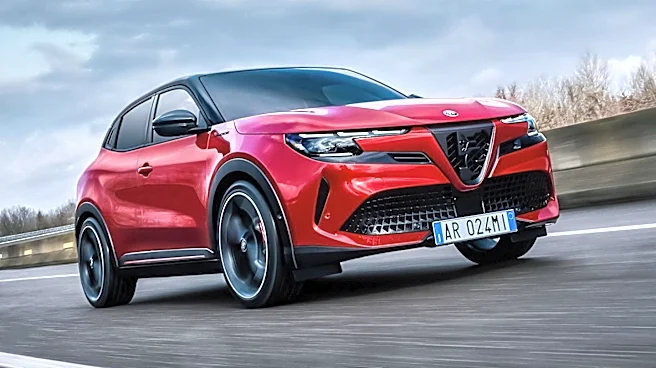
embracing multi-energy platforms. The current Giulia and Stelvio models, including their Quadrifoglio versions, are expected to remain in production through 2027, with their successors' platforms and launch timings still under development. The first new model, a C-segment SUV, is anticipated in the fourth quarter of 2027, produced at Stellantis' Melfi plant on the STLA Medium platform, offering both hybrid and electric powertrain options. This SUV is widely expected to succeed the Tonale. Additionally, Alfa Romeo will re-enter the compact hatchback segment, a category it exited after discontinuing the Giulietta, utilizing the scalable STLA One platform for combustion, hybrid, and electric powertrains. The Junior model will continue to support sales in the B segment, and the company will also pursue limited-production bespoke vehicles through its BOTTEGAFUORISERIE program.
Why It's Important?
This strategic pivot by Alfa Romeo, moving away from an exclusive EV strategy to a multi-energy platform approach, reflects a broader industry trend of adapting to evolving market demands and regulatory landscapes. For the U.S. automotive market, this could mean a more diverse range of Alfa Romeo vehicles, potentially appealing to a wider customer base who may not yet be ready for full electric vehicle adoption. The introduction of new SUV and compact hatchback models could increase Alfa Romeo's competitiveness in key segments, challenging established players and potentially boosting its market share. The decision to retain multi-energy powertrains for future Giulia and Stelvio models suggests a pragmatic response to consumer preferences and infrastructure readiness, ensuring the brand remains relevant across different buyer segments. This flexibility could also mitigate risks associated with a rapid, singular transition to EVs, allowing Alfa Romeo to better navigate uncertainties in technology adoption and charging infrastructure development in the U.S.
What's Next?
The first new model, a C-segment SUV, is slated for release in the fourth quarter of 2027, with more details on its name and specifications expected closer to its launch. Alfa Romeo will continue to define the successors for the Giulia and Stelvio, with further communications regarding their platforms, launch timings, and body styles anticipated. The company has not yet announced a facelift schedule for the Junior model, but updates could occur later in the decade. The development of the new C-segment hatchback will also progress, with its commercial name and styling yet to be revealed. The BOTTEGAFUORISERIE program will continue to produce exclusive, limited-edition projects, with at least one more such project planned. The exact transition between the current Tonale and its successor SUV will depend on Alfa Romeo's industrial plans for 2027, including when production at Pomigliano will conclude. Stakeholders, including consumers, dealers, and competitors, will be closely watching for further announcements regarding these new models and the brand's long-term strategy.
Beyond the Headlines
Alfa Romeo's shift from an EV-only strategy to a multi-energy approach highlights the complex challenges and uncertainties facing the automotive industry's transition to electrification. While many manufacturers initially committed to aggressive EV timelines, the realities of consumer adoption rates, charging infrastructure development, and raw material costs are prompting a more diversified approach. This move by Alfa Romeo could signal a broader trend among luxury and performance brands to offer a mix of powertrain options, catering to different market segments and regional regulations. It also underscores the importance of flexibility in product development and manufacturing platforms, such as STLA Medium and STLA One, which can accommodate various energy sources. The emphasis on bespoke, limited-production vehicles through BOTTEGAFUORISERIE also reflects a strategy to maintain brand exclusivity and appeal to high-end collectors, balancing volume sales with brand prestige. This dual approach allows Alfa Romeo to pursue both mainstream market penetration and niche luxury offerings, adapting to a dynamic automotive landscape.