

What's Happening?
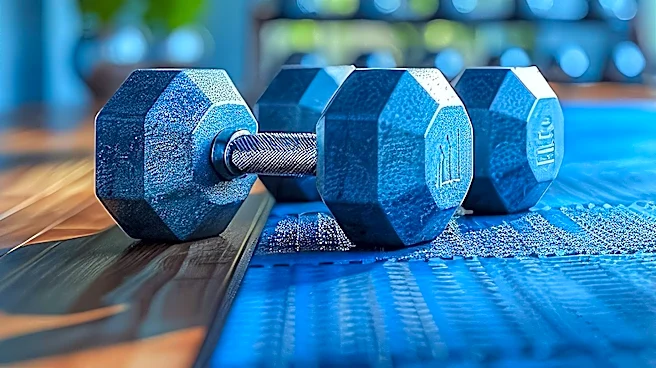
Midlife fitness coach Caroline Idiens has shared a 20-minute, full-body strength workout designed for beginners, utilizing only two dumbbells. This routine, posted on Instagram, aims to provide an accessible entry point into strength training for individuals
with limited time. The workout consists of nine exercises, including static lunges with overhead press, squat to press, curtsy lunge into squat, plank into triceps kickback, Romanian deadlift into upright row, static lunge into front raise, mountain climbers into push-up, Russian twists, and glute bridge with skull crusher. Idiens emphasizes the importance of a proper warm-up, suggesting 10 minutes of light cardio followed by dynamic mobility work, before completing two rounds of the exercise circuit. This initiative addresses a common hurdle for newcomers to strength training: knowing how to structure effective workouts without extensive gym knowledge.
Why It's Important?
This initiative is important for promoting physical activity and strength training among the general U.S. population, particularly for beginners and those in midlife. Many individuals face barriers to starting a fitness routine, such as lack of time, uncertainty about exercise selection, and intimidation by complex gym environments. Idiens' simplified, home-based workout addresses these challenges by offering a structured, time-efficient, and equipment-minimal solution. By making strength training more accessible, it can contribute to improved public health outcomes, including enhanced muscle mass, bone density, balance, and overall longevity. This approach can also reduce the financial burden associated with gym memberships or personal trainers, making fitness more equitable. The emphasis on consistency over intensity in beginner routines helps foster sustainable exercise habits, which is crucial for long-term health benefits and reducing the prevalence of sedentary lifestyles in the U.S.
What's Next?
Following the release of this beginner-friendly workout, it is likely that more fitness coaches and platforms will adopt similar strategies to cater to individuals seeking accessible and time-efficient exercise routines. The trend towards home-based workouts, accelerated by recent global events, is expected to continue, with an increased demand for content that requires minimal equipment and space. We may see further development of specialized programs targeting specific demographics, such as midlife adults, with tailored exercises and modifications. Additionally, the success of such programs could lead to collaborations between fitness experts and health organizations to disseminate these accessible routines more broadly, potentially through online challenges, community programs, or digital fitness applications. The focus will likely remain on building foundational strength and promoting consistent engagement to ensure long-term health benefits.
Beyond the Headlines
Beyond the immediate benefits of physical fitness, the promotion of accessible strength training routines like Caroline Idiens' workout has broader societal implications. It challenges the perception that effective fitness requires extensive gym access or specialized knowledge, democratizing health and wellness. This shift can empower individuals to take greater control over their physical health, fostering a sense of self-efficacy and reducing reliance on external fitness institutions. Ethically, it promotes inclusivity by offering solutions for those who may feel marginalized by traditional fitness culture due to age, body type, or socioeconomic status. Culturally, it contributes to a growing movement that values holistic well-being and sustainable lifestyle changes over fleeting fitness trends. The long-term impact could be a more physically resilient and health-conscious population, leading to reduced healthcare costs and an improved quality of life across various age groups in the U.S.