






What's Happening?
Shield AI, a prominent defense contractor known for its X-Bat and V-Bat VTOL drones and Hivemind autonomy software, has announced its acquisition of Echodyne in a $5.3 billion transaction. Echodyne specializes in next-generation, solid-state radar systems
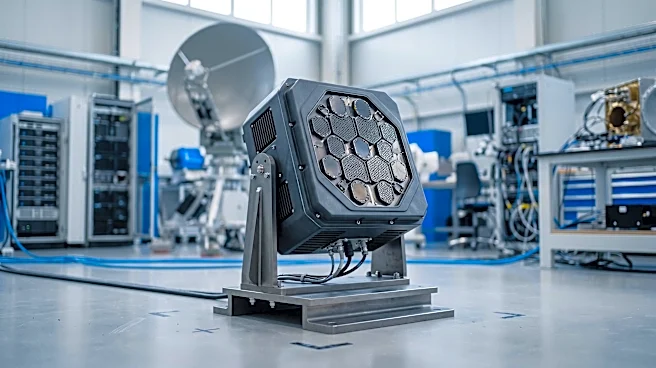
utilizing patented Metamaterials Electronically Scanned Array (MESA) technology. These advanced radar systems are designed for detecting drones and can be integrated into various weapons and monitoring systems, including high-energy lasers and microwave weapons. The acquisition aims to significantly expand Shield AI's capabilities in drone warfare. Echodyne recently secured a $250 million contract from the Defense Department’s JIATF-401 to supply counter-drone technology to military forces over 36 months. Echodyne's CEO, Eben Frankenberg, noted a substantial global demand for counter-drone radar, projecting a tenfold growth by 2030, driven by recent conflicts in Ukraine and Iran that highlighted the transformative impact of drones in modern warfare.
Why It's Important?
This acquisition is significant for the U.S. defense industry as it consolidates advanced drone technology and counter-drone capabilities under one major contractor. The integration of Echodyne's sophisticated radar systems with Shield AI's autonomous drone platforms and AI software creates a more comprehensive solution for both offensive and defensive drone operations. This move addresses the rapidly evolving landscape of modern warfare, where low-cost, mass-produced drones pose significant threats to traditional defense architectures. By enhancing the ability to detect and counter drone swarms, the combined entity can offer more robust protection for military assets and critical infrastructure. The increased demand for counter-drone technology, as highlighted by recent global conflicts, underscores the strategic importance of this merger in strengthening national security and maintaining a technological edge in unmanned systems.
What's Next?
Following the acquisition, Shield AI plans to integrate Echodyne's radar technology into its existing portfolio, aiming to create a new generation defense technology company with three core business units: autonomy software, autonomous systems, and mission systems. This integration is expected to lead to the development of more advanced and integrated unmanned systems capable of multi-agent teaming and swarming across various domains, including air, sea, and space. The combined company will likely focus on fulfilling existing contracts, such as Echodyne's $250 million contract with the Defense Department, while also pursuing new opportunities in the rapidly expanding global counter-drone market. Further advancements in AI-powered autonomous systems and enhanced sensor capabilities are anticipated, potentially influencing future military procurement and defense strategies.
Beyond the Headlines
The Shield AI-Echodyne merger reflects a broader trend in defense technology towards integrating AI, autonomy, and advanced sensing capabilities to address the challenges of modern warfare. The emphasis on counter-drone technology highlights a shift in military doctrine, acknowledging the pervasive threat posed by unmanned aerial systems. This development could accelerate the adoption of AI-driven defense systems, potentially leading to more automated and less human-intensive combat scenarios. Ethically, the increased autonomy in warfare raises questions about decision-making processes in combat and accountability. Legally, the proliferation of advanced drone technology and counter-drone measures may necessitate new international regulations and arms control agreements to manage their deployment and prevent escalation. Culturally, the growing reliance on AI in defense could reshape public perception of warfare and the role of technology in national security.