







What's Happening?
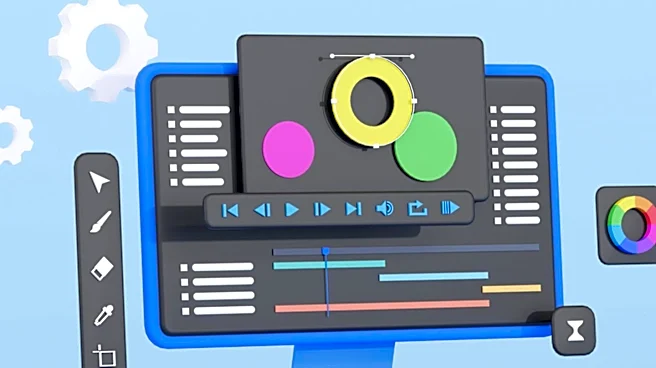
LottieFiles has launched a new 'Motion Design Skill' designed to equip AI agents with universal motion design principles for UI animations. This skill aims to teach AI agents to act as 'motion directors,' guiding them in selecting appropriate timing,
easing, choreography, and emotional intent for animations before any code is written. It is compatible with over 40 AI agents, including Claude Code, Cursor, and GitHub Copilot, and works across various animation systems such as CSS, Framer Motion, GSAP, Lottie, and Spring. The skill provides a comprehensive framework, including an 8-step checklist, motion personality archetypes, duration/easing tables, property selection guides, and common animation patterns. It also delves into the philosophy behind motion design, adapting Disney's 12 principles for UI, mapping emotions to motion, and structuring narrative within animations. The skill is intended for use in UI animations, micro-interactions, feedback animations, loading/success/error states, scroll-triggered animations, brand motion identity, and multi-element choreography.
Why It's Important?
This development is significant for the U.S. technology and design industries as it standardizes and streamlines the creation of UI animations, potentially leading to more consistent and higher-quality user experiences across various digital platforms. By enabling AI agents to understand and apply core motion design principles, it could reduce the time and resources required for developers and designers to implement complex animations. This could empower smaller businesses and startups to create sophisticated user interfaces without extensive specialized motion design expertise. The adoption of such a skill could also foster a more uniform expectation for animation quality in digital products, influencing how U.S. companies approach their digital product development and user engagement strategies. Furthermore, it highlights the growing trend of AI assisting in creative and design-oriented tasks, potentially shifting job roles and skill requirements within the design and development sectors.
What's Next?
The widespread adoption of LottieFiles' Motion Design Skill by AI agents could lead to a significant evolution in how UI animations are conceptualized and implemented. Developers and designers are likely to integrate this skill into their workflows, leveraging AI to automate and refine animation processes. This could result in a proliferation of more dynamic and engaging user interfaces across web and mobile applications. Future updates to the skill may include more advanced principles, broader compatibility with emerging animation technologies, and deeper integration with design tools. The success of this initiative could also spur other companies to develop similar AI-driven design tools, further accelerating the automation of creative tasks in the U.S. tech landscape. Training programs and educational resources may also emerge to help professionals adapt to these new AI-assisted design paradigms.
Beyond the Headlines
The introduction of AI-driven motion design tools like LottieFiles' skill raises broader questions about the future of creative professions and the balance between human creativity and artificial intelligence. While these tools can enhance efficiency and consistency, there's a potential for homogenization in design if not used thoughtfully. The ethical implications of AI influencing emotional responses through UI animations also warrant consideration, as subtle motion cues can significantly impact user perception and behavior. This development could also lead to a redefinition of 'design expertise,' shifting the focus from manual execution to strategic direction and AI management. Ultimately, it underscores a larger societal trend where AI is increasingly becoming a co-creator, prompting discussions about intellectual property, artistic originality, and the evolving role of human designers in a technologically advanced world.