


What's Happening?
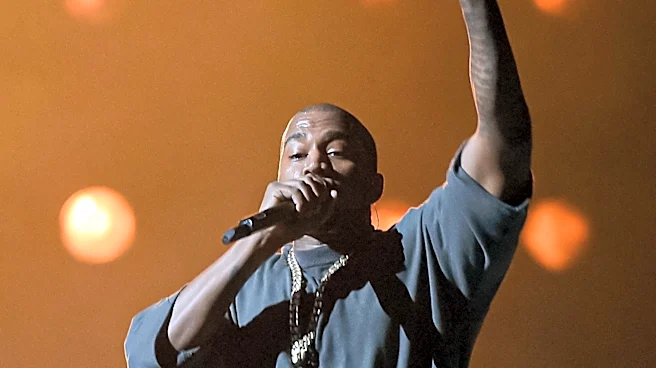
Kanye West, also known as Ye, has successfully held multiple sold-out stadium concerts across the U.S., including a record-breaking show at AT&T Stadium in Arlington, Texas, which reportedly drew 80,000 attendees. He also performed at Reliant Stadium in Houston
and is scheduled for a show at Glendale's State Farm Stadium. These events follow a period where West faced public criticism and apologies for antisemitic remarks. Radio hosts Ebro Darden and Peter Rosenberg discussed on 'The Ebro Laura Rosenberg Show' how West managed to achieve such success, with Rosenberg suggesting that the 'perceived comeback thing' and a public desire for a redemption story contributed to the high attendance. Ebro Darden acknowledged West's 'great catalog' and significant production value in his shows.
Why It's Important?
The success of Kanye West's stadium shows highlights a complex dynamic within the entertainment industry and public perception. Despite recent controversies and apologies for antisemitic comments, his ability to draw massive crowds suggests that a significant portion of his fanbase remains loyal or is drawn by the spectacle and his musical catalog. This situation raises questions about accountability in public figures and the impact of 'cancel culture' on artists with established careers. It also demonstrates the potential for artists to rebound from public backlash, particularly when their work is perceived to have high production value or a strong artistic appeal. The phenomenon could influence how other public figures navigate controversies, potentially encouraging a focus on performance and artistic output as a means of regaining public favor.
What's Next?
Kanye West is set to continue his series of stadium performances with an upcoming show at Glendale's State Farm Stadium. The ongoing success of these events may lead to further tour dates or new music releases, capitalizing on the renewed public engagement. The discussions among radio hosts suggest that the narrative of a 'comeback' is a significant factor in his current appeal, indicating that future public appearances or statements might continue to play into this storyline. The entertainment industry will likely observe the sustained commercial viability of West's performances as a case study in managing artist controversies and maintaining audience engagement.
Beyond the Headlines
The phenomenon of Kanye West's sold-out stadium shows, despite recent controversies, delves into deeper societal implications regarding forgiveness, celebrity culture, and the separation of art from artist. It prompts reflection on whether public apologies are sufficient for redemption in the eyes of fans, or if the allure of a performer's artistic output can overshadow past transgressions. The narrative of a 'comeback' also taps into a broader cultural fascination with redemption stories, suggesting a public willingness to embrace figures who appear to overcome adversity, even if self-inflicted. This situation could set precedents for how the public and the entertainment industry respond to future controversies involving high-profile individuals, potentially influencing the balance between accountability and artistic freedom.