


What's Happening?
Fernando Alonso, a two-time champion, has stated that Aston Martin has achieved a remarkable three-second reduction in their qualifying deficit to the leaders over the course of two races, following recent upgrades. This assessment comes after the team
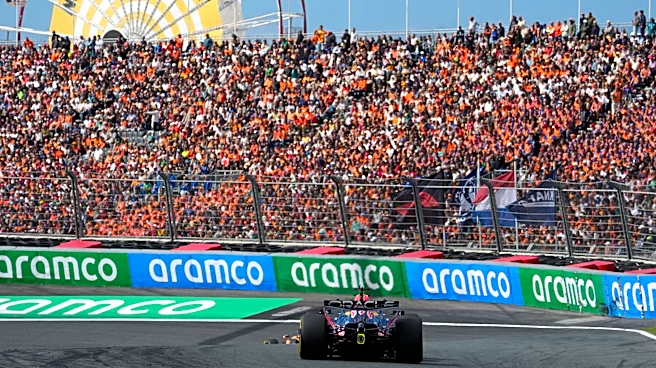
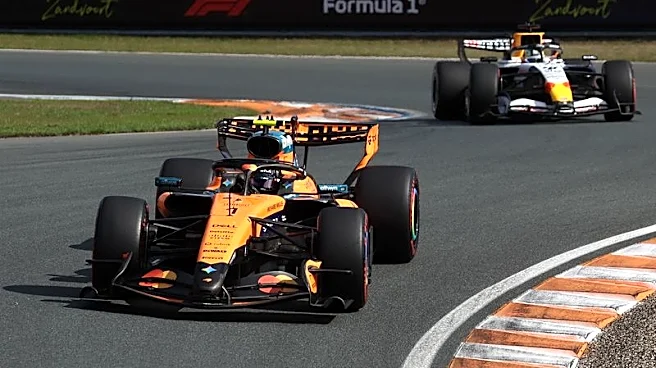
deployed chassis upgrades in Hungary and introduced a new Honda engine at Zandvoort. Despite not advancing past Q1 in the recent Dutch Grand Prix qualifying, Alonso highlighted that the gap to the segment topper, Oscar Piastri, was 1.050 seconds, a significant improvement from the 4.137-second deficit to Lando Norris in Belgium two races prior. He noted that while Spa is a longer track, which can widen gaps, the overall gain of 3.087 seconds is substantial. Alonso expressed optimism about the team's progress, stating that 'everything is working as expected,' but acknowledged the need for further optimizations, particularly from the factory, which he anticipates closer to Monza. His teammate, Lance Stroll, however, offered a more reserved view, suggesting the upgrades provided 'not nearly enough' of a boost.
Why It's Important?
This development is important for Aston Martin and the broader Formula 1 landscape as it signals a potential shift in the competitive order. A three-second gain in qualifying performance, as claimed by Alonso, is a monumental improvement in a sport where milliseconds often determine outcomes. Such a leap could elevate Aston Martin from a midfield contender to a more consistent challenger for higher positions, impacting championship standings and team strategies. For Honda, the engine supplier, this indicates progress in their power unit development, which could attract future partnerships or strengthen existing ones. The differing opinions between Alonso and Stroll highlight the complexities of performance evaluation and the subjective experience of drivers, but Alonso's detailed analysis suggests a tangible step forward. This improvement could also influence sponsorship deals and team investments, as enhanced performance often correlates with increased commercial interest and financial backing.
What's Next?
Aston Martin will likely focus on further optimizing their car and power unit, with Alonso indicating that significant changes from the factory are expected closer to the Monza race. The team will need to address the 'driveability' issues with the Honda power unit, which Lance Stroll highlighted as a major concern, citing inconsistent engine braking and rejected downshifts. Honda's trackside general manager, Shintaro Orihara, has acknowledged these issues and stated that the manufacturer is actively working on improving control over the internal combustion engine and consistency of combustion behavior. The immediate challenge for Aston Martin will be to translate these qualifying gains into stronger race performances, especially given Alonso's observation that overtaking on straights remains difficult. Their ability to consistently score points will be crucial in the upcoming races to solidify their improved standing and demonstrate the full potential of their upgrades.
Beyond the Headlines
The contrasting perspectives between Fernando Alonso and Lance Stroll on the effectiveness of the upgrades offer a deeper insight into the psychological and technical aspects of Formula 1. While Alonso focuses on the objective data of reduced lap time deficits, Stroll's emphasis on 'driveability' points to the subjective feel and confidence a driver needs to extract maximum performance. This divergence underscores the challenge of developing a car that is both statistically fast and intuitively manageable for different driving styles. Furthermore, the reliance on 'big changes in the factory or software' from Japan highlights the globalized nature of modern F1, where technical advancements are often a collaborative effort across continents. The ongoing struggle with the Honda power unit's driveability, despite overall performance gains, suggests that integrating new technologies seamlessly into a high-performance racing machine is a continuous and complex process, requiring iterative refinements and close collaboration between engine suppliers and chassis designers.