




What's Happening?
The city of West Hollywood is facing challenges in accurately tracking commercial vacancies, despite a recent increase in office vacancy rates. According to a February 2, 2026, council item on commercial vacancy data, the citywide office vacancy rate rose
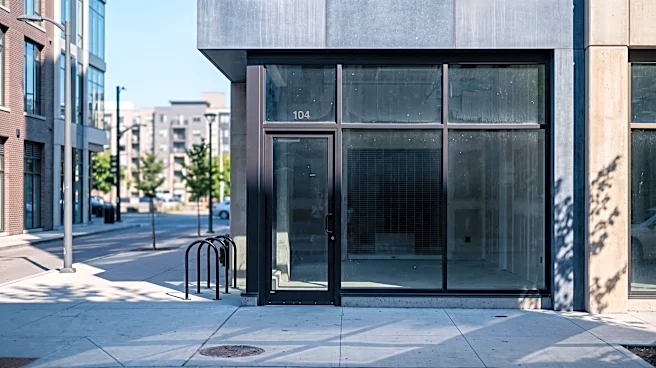
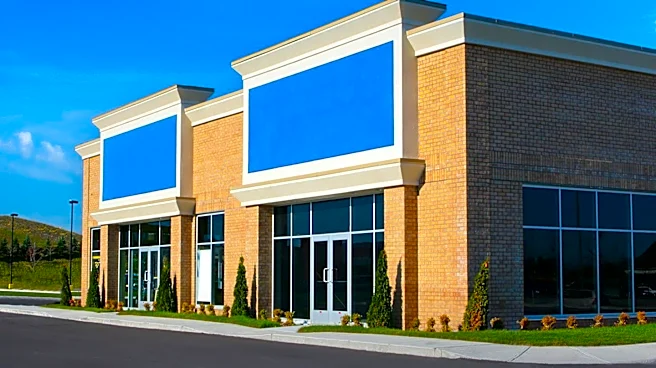
from 14.9% in the third quarter of 2025 to 15.8% in the fourth quarter. Conversely, retail vacancy saw a decrease from 10.7% to 9.6% during the same period. However, an October 2025 council item highlighted a significant gap: the city's current systems cannot identify specific vacant units, their duration of emptiness, or the underlying reasons. This lack of granular data complicates policy development, as evidenced by a rejected commercial vacancy tax ballot measure and a business task force's recommendation for a public dashboard to map vacant storefronts rather than implement new taxes. The city's existing vacant-property program, expanded in 2020, primarily focuses on stalled construction rather than a comprehensive census of all empty commercial spaces.
Why It's Important?
The inability of West Hollywood to precisely identify and track vacant commercial properties poses a significant hurdle for urban planning and economic development. Without specific data on which storefronts are empty and for how long, the city struggles to implement targeted interventions or incentives to revitalize commercial corridors. This situation impacts local businesses, property owners, and the overall economic health of the community. The debate over a commercial vacancy tax, which was ultimately rejected due to concerns about burdening existing tenants and hindering post-pandemic recovery, underscores the need for data-driven solutions. The current approach, relying on aggregated percentages rather than unit-level information, limits the effectiveness of staff efforts to engage with retail and activation specialists. The lack of a clear understanding of vacancy causes also prevents the city from addressing systemic issues that contribute to prolonged emptiness, potentially leading to blighted areas and reduced foot traffic for neighboring businesses.
What's Next?
The West Hollywood City Council has a listed agenda for November 16, 2026, which may address ongoing discussions regarding commercial vacancy. A previous proposal by Councilmember Lauren Meister in October 2025 suggested an audit of vacant residential and commercial units to determine their number, reasons for vacancy, and potential policy solutions. If approved, the evaluation of this workplan is anticipated during the FY 2027 budget cycle. The Business Task Force has recommended the creation of a public commercial-vacancy dashboard to show empty storefronts and their vacancy duration, along with exploring incentives for landlords who fill vacancies and disincentives for those who leave properties empty. These recommendations suggest a shift towards more data-informed and incentive-based approaches, moving away from punitive measures like the previously rejected vacancy tax. The city's ability to implement these recommendations will depend on future council decisions and budget allocations.
Beyond the Headlines
The situation in West Hollywood reflects a broader challenge faced by many urban centers: balancing property rights with community economic vitality. The resistance to a vacancy tax, despite its potential to incentivize occupancy, highlights the complex interplay between economic recovery, landlord concerns, and the desire to avoid perceived punitive measures. The emphasis on a public dashboard and incentives suggests a move towards transparency and collaborative solutions, aiming to empower both the city and property owners with information to address vacancies proactively. This approach could set a precedent for other cities grappling with similar issues, focusing on understanding the 'why' behind vacancies rather than just the 'what.' The long-term implications involve fostering a more dynamic commercial environment, potentially attracting new businesses, and enhancing the overall vibrancy of West Hollywood's commercial districts.