




What's Happening?
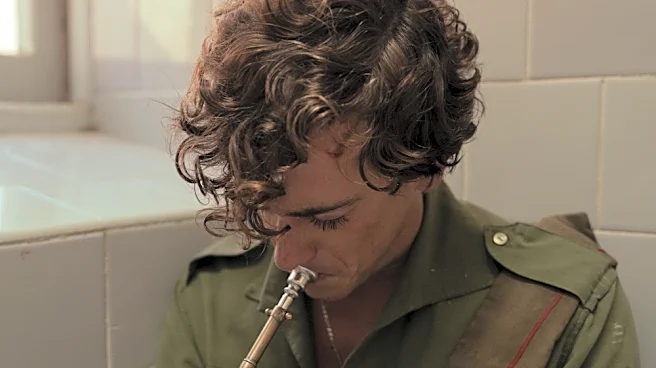
Daniel Kaluuya portrays Jay, the brother of the main character Misty, in Chris Rock's film 'Misty Green.' Kaluuya's character, who has bipolar disorder and is recently released from a medical facility, is described as underdeveloped, appearing in only
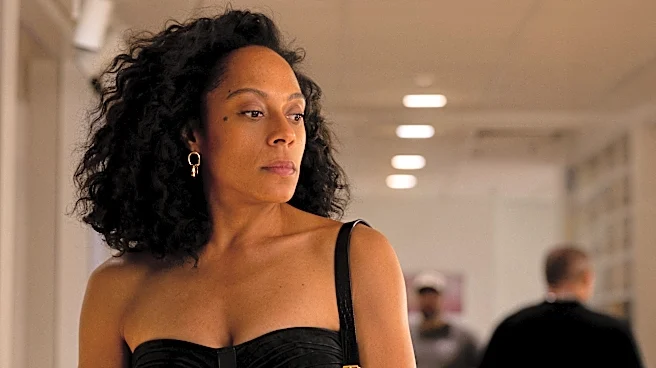
a few scenes. Despite Kaluuya's reputation for selective roles, his part in 'Misty Green' is noted for its limited screen time and lack of depth. The film itself has received mixed reviews, with critics often praising lead actress Rosalind Eleazar's performance while criticizing the overall narrative and direction by Chris Rock. The plot includes Misty's struggle to find meaningful work in Hollywood, her hard-partying lifestyle, and a background commentary on racial profiling in Los Angeles, which also impacts Kaluuya's character, Jay, who is subjected to multiple police stops.
Why It's Important?
The underutilization of a respected actor like Daniel Kaluuya in 'Misty Green' highlights a broader issue within the film industry regarding talent allocation and script development. For actors, taking on roles that are ultimately underdeveloped can impact their career trajectory and public perception, especially when they are known for choosing significant parts. For the film, it suggests potential missed opportunities to enrich the narrative and character dynamics, which could have contributed to a more compelling story. The film's mixed reception, particularly the disparity between critical acclaim for a lead performance and criticism for the overall production, underscores the challenges independent films face in gaining widespread recognition and awards consideration. This situation also reflects on the creative choices made by established figures like Chris Rock, whose directorial vision is being scrutinized for its perceived aimlessness and lack of depth in addressing various plotlines, including social commentary on racial profiling.
What's Next?
Given the film's limited theatrical release and subsequent move to Netflix, 'Misty Green' faces the challenge of finding its audience amidst a vast array of streaming content. The critical reception, which largely praises Rosalind Eleazar's performance but critiques the film itself, suggests that while Eleazar might gain individual recognition, the film as a whole may struggle to achieve significant cultural impact or awards season traction. For Daniel Kaluuya, the experience might influence his future role selections, potentially leading him to prioritize projects with more substantial character development. The film's commentary on racial profiling, though underdeveloped, could still spark discussions among viewers, particularly concerning its portrayal within the context of Los Angeles. The ongoing debate about separating an actor's performance from the quality of the film they are in will likely continue, impacting how 'Misty Green' and its cast are perceived in the long term.
Beyond the Headlines
The case of 'Misty Green' and Daniel Kaluuya's role touches upon the ethical and artistic responsibilities of filmmakers to fully develop their characters and narratives, especially when addressing sensitive topics like bipolar disorder and racial profiling. The film's struggle to balance multiple plotlines and its perceived 'aimlessness' raise questions about the creative process and the potential for a director's vision to fall short, even with a talented cast. The disparity between Eleazar's acclaimed performance and the film's overall critical reception also highlights a recurring challenge in awards season: whether a strong individual performance can elevate a flawed film to critical success. This scenario could influence future discussions about how films are judged and whether individual artistic contributions can be truly separated from the collective work. It also underscores the impact of distribution strategies, such as limited theatrical releases followed by streaming, on a film's visibility and legacy.