





What's Happening?
Brazil's Finance Ministry has issued Ordinance No. 3,268/2026, creating the Chamber for Regulatory Affairs (CAREG). This new consultative body is linked to the Permanent Technical Consultative Committee (CTCP) of Brazil's emissions trading system (SBCE).
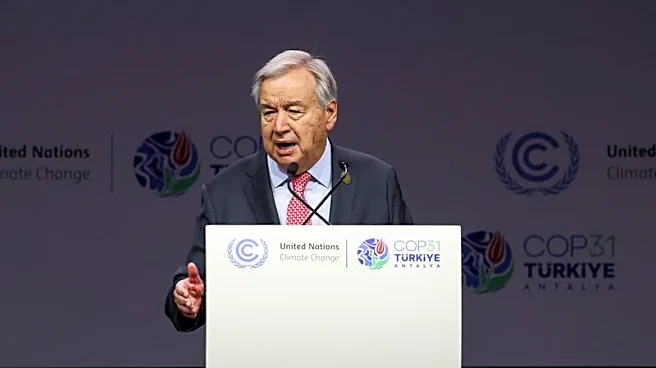
CAREG's purpose is to provide a formal platform for business associations representing sectors covered by the SBCE to advise on key regulations. The ordinance mandates that the SBCE's managing body must consult CAREG before issuing regulations on critical matters, including methodologies for measuring, reporting, and verifying (MRV) emissions, identifying regulated activities and gases, setting annual emissions thresholds, preparing the National Allocation Plan, defining price stabilization mechanisms for Brazilian Emissions Allowances (CBEs), accrediting emission reduction methodologies, and linking the SBCE with international emissions trading schemes. This development occurred during the UN Climate COP31 in Antalya, Turkiye. Ana Paula Machado, undersecretary for regulation and methodologies at SEMC, emphasized that sector representatives possess the deepest understanding of production processes, making their input crucial for effective regulation.
Why It's Important?
The establishment of CAREG is a significant step towards ensuring that Brazil's emissions trading system is practical, effective, and well-received by the industries it regulates. By formally integrating industry expertise into the regulatory process, Brazil aims to create a system that is technically sound and minimizes unintended negative impacts on businesses. This collaborative approach can foster greater compliance and innovation within regulated sectors as they transition to lower-carbon operations. For U.S. companies operating in Brazil or those with supply chains linked to Brazilian industries, this development signals a more structured and potentially predictable regulatory environment for carbon emissions. It also highlights Brazil's commitment to developing a robust carbon market, which could influence international carbon market dynamics and create opportunities or challenges for global businesses engaged in emissions trading or seeking to offset their carbon footprint.
What's Next?
CAREG will be composed exclusively of business associations representing sectors as they enter the SBCE's MRV implementation phases. Starting in 2027, covered sectors will include aluminum, integrated iron and steel production, cement, oil and gas exploration and production, selected chemical industries, iron ore and bauxite mining, pulp and paper, and glass. Aviation will also participate despite having a separate MRV process. Jose Pedro Neves, deputy secretary for the carbon market, will chair CAREG, with Teresa Melo as vice-chair. The CAREG presidency is required to convene its inaugural meeting and present a draft internal rulebook within 45 days of the ordinance's effective date. In the coming weeks, SEMC plans to launch public consultations on programs for measuring emissions from regulated companies and for activities that reduce greenhouse gases, along with sector-specific MRV regulations for the SBCE's first implementation phase.
Beyond the Headlines
This move by Brazil reflects a broader global trend towards establishing more inclusive and technically informed carbon market regulations. By giving regulated sectors a formal voice, Brazil is attempting to balance environmental objectives with economic realities, potentially leading to a more resilient and equitable transition. The emphasis on sector-specific MRV regulations acknowledges the diverse operational complexities across industries, suggesting a nuanced approach to emissions reduction. This could serve as a model for other developing economies establishing their own carbon markets, demonstrating how stakeholder engagement can enhance the legitimacy and effectiveness of climate policies. The success of CAREG will depend on its ability to genuinely integrate industry insights into policy-making while maintaining the environmental integrity of the SBCE, potentially setting a precedent for how governments and industries can collaborate on climate action.