






What's Happening?
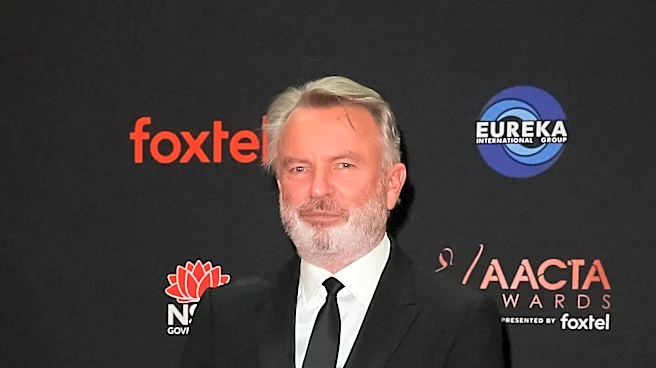
Sam Neill's portrayal of Dr. Alan Grant in 'Jurassic Park III' is being recognized as a strong performance within a film widely considered to be a disappointing sequel. The 2001 movie, which concluded the original 'Jurassic Park' trilogy, is noted for numerous
flaws, including a scene where a velociraptor speaks to Dr. Grant in a dream. Despite these criticisms, Neill's return as the paleontologist was a significant draw for audiences, especially after his absence from 'The Lost World.' His character in 'Jurassic Park III' maintained a 'charming authority,' evolving from his initial portrayal in the 1993 original. While Dr. Grant's feelings towards children had softened, he still exhibited a stern demeanor when necessary during his visit to Isla Sorna. This performance stands out as a positive aspect of a film that otherwise struggled to meet the high standards set by its predecessor.
Why It's Important?
This discussion is important for the entertainment industry as it underscores how individual performances can sometimes elevate or salvage aspects of critically panned films. For actors like Sam Neill, maintaining a high standard of acting, even in less successful projects, can solidify their reputation and enduring appeal. It also highlights the challenges faced by film franchises in sustaining quality across multiple installments, particularly when original creative teams or narrative directions shift. The audience's continued appreciation for Neill's Dr. Alan Grant, despite the film's overall reception, demonstrates the power of character consistency and strong acting in building lasting cinematic legacies. This can influence future casting decisions and franchise development strategies, emphasizing the value of retaining key talent even when a series faces creative hurdles.
What's Next?
While 'Jurassic Park III' marked a temporary end to the franchise for over a decade, the enduring appeal of characters like Dr. Alan Grant, and actors like Sam Neill, often leads to their eventual return in later installments or reboots. The recognition of Neill's performance in a less-than-stellar film could encourage studios to prioritize strong acting and character development in future franchise entries, rather than solely relying on special effects or plot twists. This could also influence how actors approach roles in established franchises, knowing that their individual contributions can be critically appreciated even if the film itself is not. For fans, it reinforces the idea that revisiting older films can still offer moments of enjoyment, even if the overall experience is mixed.
Beyond the Headlines
The phenomenon of a 'great performance trapped in a terrible movie' raises broader questions about the collaborative nature of filmmaking and the individual artist's role within it. It highlights the distinction between an actor's craft and the overall quality of a production, suggesting that even with a flawed script or direction, a compelling performance can resonate. This can lead to discussions about artistic integrity, the pressures of commercial filmmaking, and how audiences perceive and value different elements of a movie. Ethically, it prompts reflection on whether actors should be held accountable for the quality of the entire film or judged primarily on their own contributions. Culturally, it contributes to the ongoing discourse about film criticism and the subjective nature of cinematic appreciation, where individual elements can be celebrated independently of the whole.