







What's Happening?
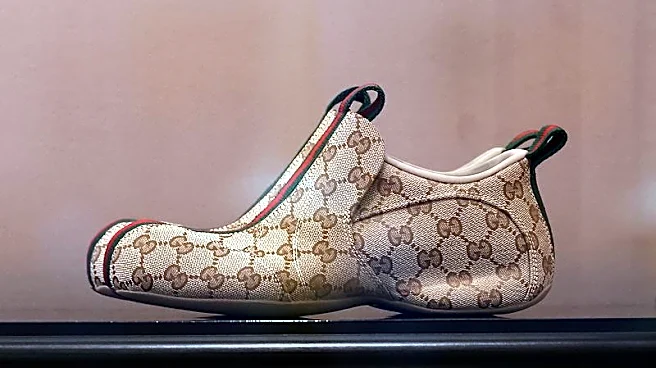
Luxury fashion brand Gucci has started selling shoes produced in China, including its new 'Drip' sneaker model. This marks a notable shift for the brand, which has historically emphasized Italian craftsmanship and production. The 'Drip' sneaker, designed
by Demna, is a stringless sock-type design made from nylon, canvas, and suede, retailing for approximately $1,000 in the United States. Reuters confirmed the 'Made in China' label on Gucci's official website and at its Paris store. Another leather slip-on sneaker model from the same collection also bears a Chinese origin mark, while other Gucci shoes on the website continue to be marked as 'Made in Italy'. Gucci clarified that Italy will remain central to its production model and identity, attributing the decision to select a Chinese company to the specific technology and production capacity required for these particular shoes, drawing parallels to collaborations with Swiss or Japanese companies for watches or glasses. The company stated it has no plans for a widespread shift of production outside of Italy.
Why It's Important?
This move by Gucci is significant for the luxury fashion industry, particularly in the U.S. market, where brand perception and country of origin play a crucial role in consumer purchasing decisions. The introduction of 'Made in China' products by a high-end brand like Gucci could challenge traditional notions of luxury, which often associate quality and exclusivity with European craftsmanship. While Gucci asserts that this is due to specialized technology, it raises questions about cost reduction and profitability, especially as Gucci's parent company, Kering, has seen sales halve and stores close due to deteriorating profitability. For U.S. consumers, this could lead to a re-evaluation of what constitutes 'luxury' and whether the country of manufacture impacts perceived value. Competitors in the luxury sector will be closely watching consumer reactions, as a successful integration of Chinese production could set a precedent for other brands facing similar economic pressures, potentially altering global supply chains and manufacturing strategies within the industry.
What's Next?
The luxury industry will closely monitor consumer reception to Gucci's 'Made in China' products, particularly in key markets like the U.S. Gucci's sales performance and brand image in the coming months will indicate whether this production strategy is sustainable or if it will face backlash from consumers who prioritize traditional European manufacturing. Other luxury brands may consider similar production diversification if Gucci's move proves successful in balancing cost efficiencies with brand integrity. There could also be increased scrutiny from consumer advocacy groups regarding transparency in labeling and the communication of production origins. Gucci will likely continue to emphasize its commitment to Italian craftsmanship for its core product lines while selectively utilizing specialized manufacturing capabilities globally. The long-term impact on the perception of 'Made in China' in the luxury sector will depend on how effectively Gucci manages this narrative and maintains its brand allure.
Beyond the Headlines
The decision by Gucci to produce certain items in China delves into deeper implications concerning the evolving definition of luxury and globalized manufacturing. Historically, 'Made in Italy' has been synonymous with unparalleled quality and heritage in fashion. This shift, even if limited, suggests that technological advancements and specialized production capabilities in countries like China are becoming increasingly competitive, even for the most exclusive brands. It challenges the romanticized notion of luxury being solely tied to geographical origin and instead highlights a pragmatic approach to sourcing based on specific manufacturing needs. This could lead to a broader re-evaluation within the luxury sector about where value truly lies—is it in the country of origin, the brand's design and intellectual property, or the specific technical expertise required for a product? Furthermore, it could spark discussions about the ethical implications of global supply chains in luxury, including labor practices and environmental standards, as brands seek to balance tradition with modern production realities.