



What's Happening?
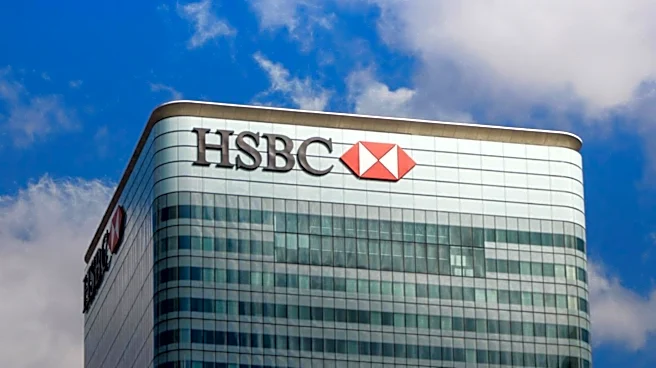
HSBC Holdings PLC (HSBC) announced on November 23, 2026, that it repurchased 1,482,803 shares on UK venues and an additional 10,000 shares in Hong Kong. These buybacks are part of a larger program initiated on October 28, 2026. Since the program's inception,
HSBC has repurchased a total of 16,901,864 shares, amounting to approximately US$293.8 million. The purpose of these share repurchases is for cancellation, which directly reduces the number of outstanding shares in the company. This action can increase the stake of each remaining shareholder in the company. The volume-weighted average price for shares bought on UK venues was £12.6644 per share. The company's issued ordinary share capital and voting rights stand at 17,118,311,643 shares.
Why It's Important?
The share buyback by HSBC Holdings PLC is significant for its existing shareholders. By reducing the total number of outstanding shares, each remaining share represents a larger proportion of the company's ownership and future earnings. This can lead to an increase in earnings per share (EPS) and potentially boost the stock price, benefiting investors. However, this strategy also involves the company using its cash reserves to fund the buybacks, which means that capital is being spent rather than retained on the balance sheet for other investments or operational needs. While it can signal confidence from the company's management in its valuation, it also reduces the liquidity of the company's assets. For the broader financial market, such large-scale buybacks by a major global bank like HSBC can influence investor sentiment and potentially set a precedent for other financial institutions considering similar capital allocation strategies.
What's Next?
HSBC's ongoing share buyback program is expected to continue to impact its share structure and potentially its stock valuation. Investors will likely monitor future announcements regarding the pace and scale of further repurchases. The company's decision to cancel these shares suggests a long-term commitment to enhancing shareholder value through capital reduction. The market will be watching for any subsequent financial reports to see the direct impact of these buybacks on key financial metrics such as earnings per share and return on equity. Future buyback announcements or changes in the program's terms could also influence market perception and investor behavior. The use of company cash for buybacks will also be scrutinized in the context of HSBC's overall financial health and its ability to fund other strategic initiatives.
Beyond the Headlines
The practice of share buybacks, while often seen as a positive for shareholders, carries deeper implications for corporate governance and capital allocation. While it can boost per-share metrics, critics argue that it can sometimes be a short-term fix to inflate stock prices rather than investing in long-term growth, innovation, or employee development. For a global financial institution like HSBC, the decision to allocate a significant amount of capital to buybacks reflects a strategic choice about how to best utilize its financial resources in the current economic climate. This move could also be interpreted as a signal about the company's assessment of its own valuation and the lack of more compelling investment opportunities elsewhere. The long-term effects on the company's competitive position and its ability to navigate future economic challenges will be a key area of observation.