


What's Happening?
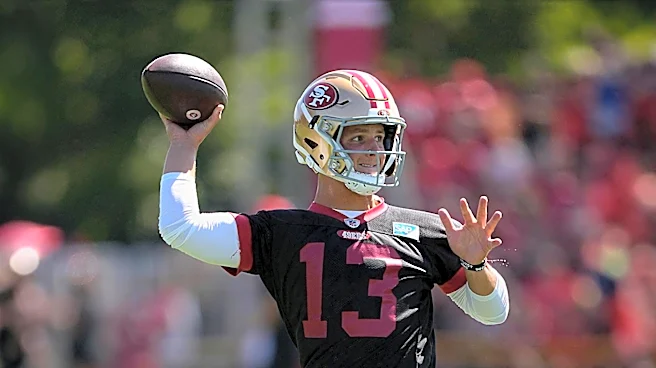
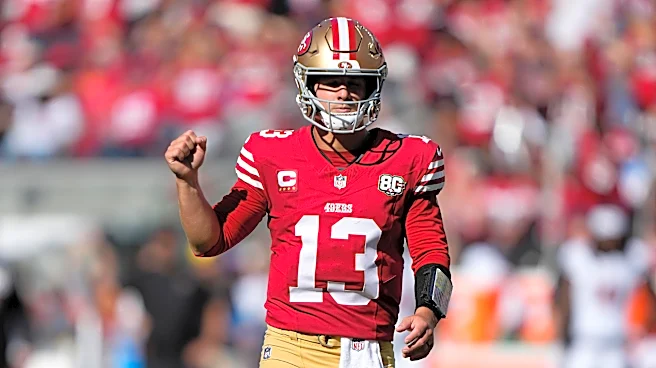
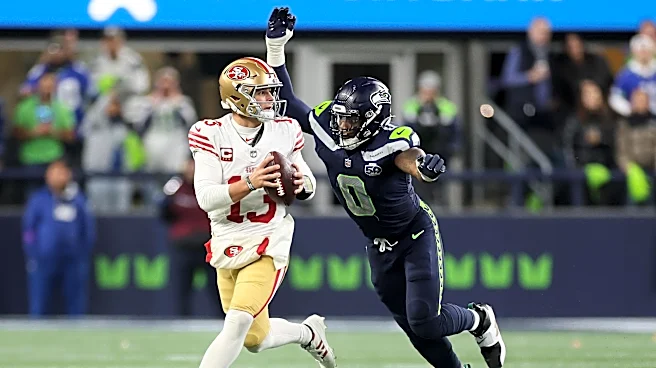
Former Cincinnati Bengals Pro Bowl wide receiver T.J. Houshmandzadeh has publicly criticized NFL scouts and analysts for labeling San Francisco 49ers quarterback Brock Purdy as an 'overachiever.' Houshmandzadeh argues that Purdy, who was the final pick
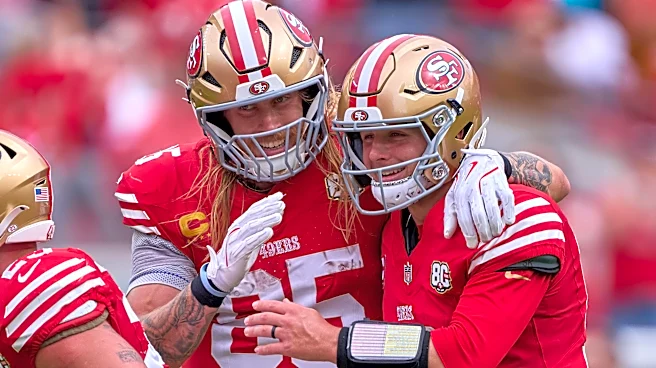
of the 2022 NFL Draft (earning him the 'Mr. Irrelevant' tag), was simply 'misevaluated' by scouts. He believes that the initial low draft position continues to unfairly influence perceptions of Purdy's talent, despite his strong performance. Purdy has led the 49ers to a 3-0 start this season, earning his first NFC Offensive Player of the Month award for September and consistently delivering high-impact performances. Houshmandzadeh compared Purdy's situation to that of undrafted two-time NFL MVP Kurt Warner, suggesting that the narrative around such players only changes after significant achievements like a Super Bowl victory.
Why It's Important?
This discussion is important because it highlights a persistent issue within professional sports scouting and evaluation: the potential for initial assessments to overshadow actual performance and talent. The 'overachiever' label, as Houshmandzadeh points out, can diminish a player's true skill by attributing success to external factors rather than inherent ability. This impacts not only the individual player's recognition and career trajectory but also the credibility of scouting processes. For NFL teams, misjudging talent can lead to missed opportunities in drafting and player development, affecting team competitiveness and financial investments. The debate also touches on the influence of narratives and labels in sports media, which can shape public and professional opinions, sometimes unfairly. Purdy's continued success challenges these preconceived notions, prompting a re-evaluation of how talent is identified and acknowledged in the league.
What's Next?
The ongoing success of Brock Purdy will continue to fuel this debate, potentially forcing NFL scouts and analysts to re-examine their evaluation methodologies. If Purdy maintains his high level of play and achieves further accolades, such as a Super Bowl victory, it could significantly alter the narrative around 'late-round' or 'undrafted' players. This might lead to a greater emphasis on on-field performance over pre-draft projections. The discussion could also encourage more transparency and accountability from scouting departments, as Houshmandzadeh suggested, by prompting them to acknowledge past misjudgments. For Purdy, continued strong performances will solidify his reputation as a top-tier quarterback, potentially leading to a more accurate assessment of his talent and a shift away from the 'overachiever' label.
Beyond the Headlines
Beyond the immediate sports context, this debate touches on broader societal themes of meritocracy, bias, and the power of initial impressions. The 'overachiever' label, often applied to individuals who exceed low expectations, can subtly undermine their achievements by implying that their success is an anomaly rather than a reflection of genuine skill. This phenomenon is not unique to sports but can be observed in various professional fields where early assessments or background can influence long-term perceptions. Houshmandzadeh's critique implicitly calls for a more objective and performance-based evaluation system, challenging the inherent biases that can exist in talent identification. It encourages a deeper look at how we define and recognize success, advocating for a focus on demonstrated ability rather than predetermined labels or initial circumstances.