



What's Happening?
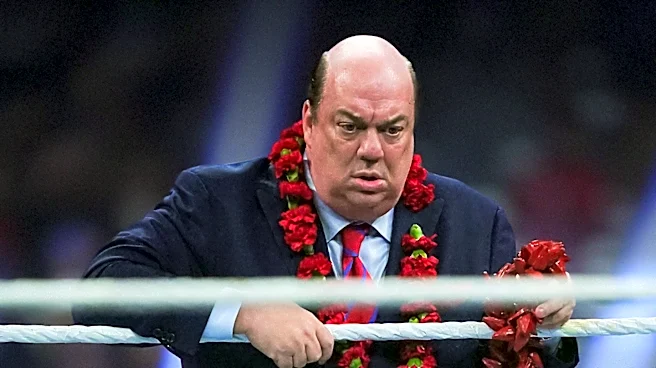
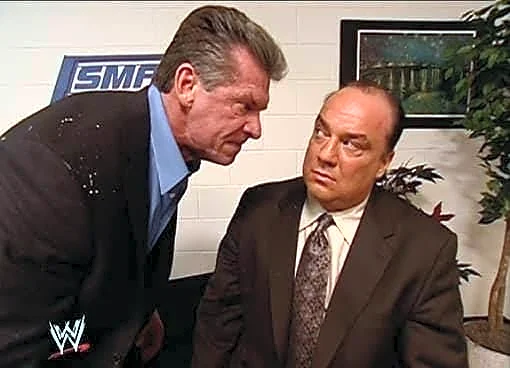
Paul Heyman, a prominent figure in professional wrestling since the 1980s, recently revealed that he once attempted to have WWE Hall of Famer Ric Flair fired from WCW. Speaking on 'In Depth with Graham Bensinger,' Heyman recounted a period in the 1980s when
their professional relationship in WCW became highly contentious. Heyman stated that he and Flair were not on the same page creatively when Flair took over the creative direction of WCW, leading to significant disagreements. The situation escalated to the point where Heyman was fired, and he subsequently tried to provoke Flair into a physical altercation, hoping that Flair, as a Turner executive, would also be dismissed. Heyman believed that such an incident would either lead to an easy lawsuit or result in Flair being fired alongside him. Despite the animosity, Heyman noted that their relationship was eventually repaired in 1990 when he returned to WCW, with Flair welcoming him back. They later mended their differences over drinks, leading to a more amicable working relationship.
Why It's Important?
This revelation offers a rare glimpse into the intense backstage politics and personal rivalries that have shaped the professional wrestling industry. It highlights the high stakes involved in creative control and personal dynamics within major wrestling promotions like WCW, which was a significant competitor to WWE during its era. The story underscores how personal conflicts, even among top talents and executives, could directly influence careers and company decisions. For fans and industry observers, it provides valuable historical context to the careers of two legendary figures, Paul Heyman and Ric Flair, illustrating the complex interplay of ambition, power, and personal relationships that often operate behind the scenes. Such insights are crucial for understanding the evolution of wrestling narratives and the careers of those who craft them, demonstrating that even long-standing rivalries can eventually be resolved, often through unexpected means.
What's Next?
While this specific incident is historical, Heyman's continued presence and influence in WWE suggest that his insights into the industry's past remain relevant. His current role as an onscreen manager and backstage contributor means that his experiences, including past conflicts and resolutions, could inform future storylines or management decisions within WWE. The anecdote also serves as a reminder of the volatile nature of professional wrestling careers, where personal and professional relationships are constantly in flux. For Ric Flair, who remains an iconic figure, such historical accounts contribute to his enduring legacy, showcasing the challenges he navigated throughout his career. The ongoing interest in these historical narratives indicates a continuous appetite among wrestling fans for behind-the-scenes stories that add depth to the public personas of wrestling legends.
Beyond the Headlines
The story of Heyman and Flair's conflict and eventual reconciliation reflects broader themes of professional rivalry and resolution in high-pressure environments. It illustrates how individuals in competitive fields often navigate intense disagreements, sometimes leading to drastic actions, but can also find common ground for future collaboration. The incident also touches upon the ethical considerations within corporate structures, particularly Heyman's attempt to provoke a physical confrontation to achieve a desired outcome. This highlights the lengths to which individuals might go to assert their position or seek retribution in a highly competitive industry. Furthermore, the eventual repair of their relationship through a shared social experience—getting drunk together—suggests that personal connections can sometimes transcend professional animosities, offering a human element to otherwise cutthroat business dealings. This narrative enriches the understanding of professional wrestling not just as a sport or entertainment, but as a complex ecosystem of human interactions.