




What's Happening?
The Light Circus Nevada Neon Museum has opened in downtown Reno, aiming to preserve and showcase a significant part of Nevada's visual history through its collection of vintage and contemporary neon signs. Housed at the National Bowling Stadium, the museum
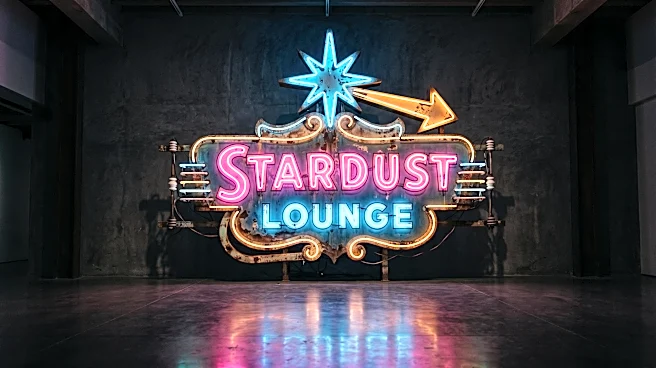
is described by organizers as one of the largest private neon sign collections globally. Visitors can view iconic Reno landmarks such as signs from Harolds Club, the Nevada Club’s “Bucky Buckaroo,” The Mapes, Deux Gros Nez, Campo, and Ichiban. The collection also features signs from Las Vegas properties like the Tropicana and Spago, spanning approximately eight decades of Nevada's history. Executive Director Will Durham initiated the collection years ago by rescuing signs from older properties that were being demolished. The museum's immersive experience, primarily lit by the glowing neon tubes themselves, highlights neon as both commercial design and art, and as a crucial element of the state’s cultural heritage. The project is a collaboration between Light Circus, Visit Reno Tahoe, the Reno Redevelopment and Urban Placemaking Agency (re:up), and the city of Reno, with re:up providing a matching grant of $24,778.50 to support downtown revitalization.
Why It's Important?
The establishment of the Light Circus Nevada Neon Museum is important for several reasons, primarily its role in cultural preservation and urban revitalization. By saving and restoring historic neon signs, the museum prevents the loss of unique visual artifacts that tell the story of Nevada's past, particularly its entertainment and commercial landscape. These signs are not merely advertisements but are recognized as art forms and symbols of the state's identity, evoking nostalgia and memories for many residents and visitors. The museum's location in downtown Reno, supported by a grant aimed at boosting revitalization, signifies its potential to act as a cultural anchor, attracting tourism and contributing to the economic vibrancy of the area. This initiative demonstrates a commitment to recognizing and celebrating the artistic and historical value of commercial signage, often overlooked in traditional historical preservation efforts. It also provides an educational platform, offering insights into design, technology, and the social history embedded in these glowing relics.
What's Next?
The Light Circus Nevada Neon Museum officially opened to the public on Friday, October 30, coinciding with Nevada Day, with admission priced at $15, and a reduced rate of $10 for Nevada residents. Regular operating hours will be Tuesday through Sunday, from 10 a.m. to 6 p.m. The museum anticipates that its collection will continue to expand as more pieces are preserved and restored, with recent additions including signs from the Olympic Motel and Peg’s Glorified Ham N Eggs. Looking ahead, museum leaders plan to introduce educational programs, walking tours, art shows, films, and community events. These future initiatives will be designed to connect with Nevada's history and design, further engaging the public and enriching the cultural landscape of Reno. The ongoing collaboration with local agencies suggests continued support for the museum's mission and its role in downtown revitalization efforts.
Beyond the Headlines
The opening of the Light Circus Nevada Neon Museum highlights a broader trend in urban cultural preservation: the recognition of commercial signage as significant historical and artistic artifacts. This initiative moves beyond traditional museum exhibits by focusing on a medium often seen as ephemeral or purely commercial, elevating it to the status of cultural heritage. The immersive experience, where the signs themselves provide the primary lighting, creates a unique atmosphere that blurs the lines between exhibition space and the historical context of the signs. This approach could inspire other cities to consider similar projects, preserving elements of their commercial past that are rapidly disappearing due due to demolition and modernization. Furthermore, the museum's emphasis on community connection through memories associated with these signs underscores the emotional and social value of such preservation efforts, fostering a sense of shared history and identity among residents.