



What's Happening?
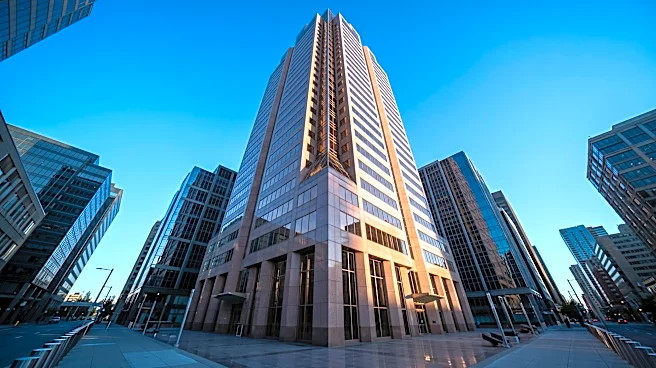
Downtown Portland is experiencing one of the highest office vacancy rates among major U.S. cities. The U.S. Bancorp Tower, known as Big Pink, had a 75% vacancy rate earlier this year. This significant vacancy follows the departure of key tenants such
as New Relic, SurveyMonkey, law firm Miller Nash, and U.S. Bank, which relocated most of its employees to Gresham. Jeff Swickard, the auto magnate who purchased Big Pink last year for $45 million, a substantial discount from its 2015 sale price of $345 million, is now exploring ideas to revitalize the building. One such idea is the development of a rooftop observation deck, similar to The Edge in midtown Manhattan, to offer a new way to experience the city. Swickard has also proposed a ground-floor food and beverage plaza as part of his efforts to modernize and reposition the 43-year-old building.
Why It's Important?
The high office vacancy rate in downtown Portland, exemplified by Big Pink's 75% emptiness, signifies a major challenge for the city's commercial real estate market and broader urban economy. This trend reflects the lasting impact of the work-from-home shift, which has altered the landscape of downtown areas across the U.S. A struggling commercial core can lead to reduced foot traffic, negatively affecting local businesses, tax revenues, and overall urban vitality. Jeff Swickard's initiatives to re-envision Big Pink, such as the proposed rooftop deck and ground-floor amenities, are crucial attempts to attract new tenants and employees back to the downtown area. His vision of filling the building with tech professionals aims to create a ripple effect, driving economic growth and supporting local businesses, which is vital for the city's recovery and long-term economic health. The success or failure of such revitalization efforts in Portland could serve as a case study for other U.S. cities grappling with similar post-pandemic commercial real estate challenges.
What's Next?
Jeff Swickard's proposal for a rooftop observation deck at Big Pink is currently an idea, with no formal plans or permits in place. The permitting process is expected to be complex, involving considerations from the Federal Aviation Administration regarding airspace regulations and the building's structural suitability. Swickard has cautioned that the probability of obtaining the necessary permits is low, indicating that the project faces significant hurdles. Alongside the rooftop deck, plans for a ground-floor food and beverage plaza are also being considered as part of the broader modernization efforts for the building. Swickard's ongoing efforts to attract tenants and reposition Big Pink will continue, with a focus on creating a workplace environment that encourages a return to office. The outcome of these initiatives will be closely watched as downtown Portland seeks to address its high office vacancy rates and stimulate economic activity.
Beyond the Headlines
The situation in downtown Portland, particularly with Big Pink's high vacancy, highlights a deeper societal and economic shift driven by evolving work patterns. The decline in traditional office occupancy challenges the long-held model of urban development centered around dense commercial districts. This shift necessitates innovative approaches to urban planning and commercial real estate, moving beyond mere office space to creating vibrant, multi-use environments that attract people for reasons beyond just work. The proposed rooftop deck, while speculative, symbolizes an attempt to transform a purely functional building into a destination, integrating leisure and community engagement into the urban fabric. This broader trend suggests that the future of downtown areas in the U.S. may depend on their ability to adapt and offer diverse experiences, blending work, entertainment, and social activities to remain relevant and economically viable in a post-pandemic world.