

What's Happening?
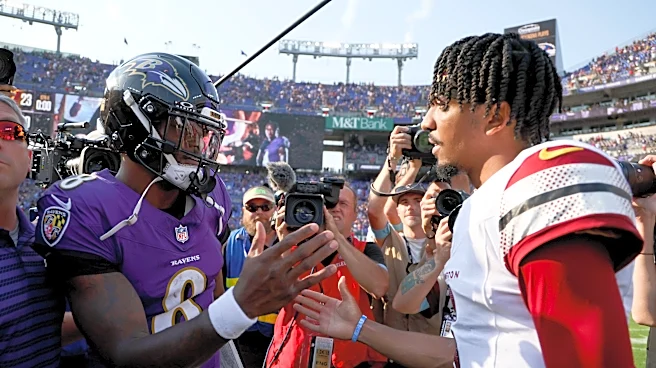
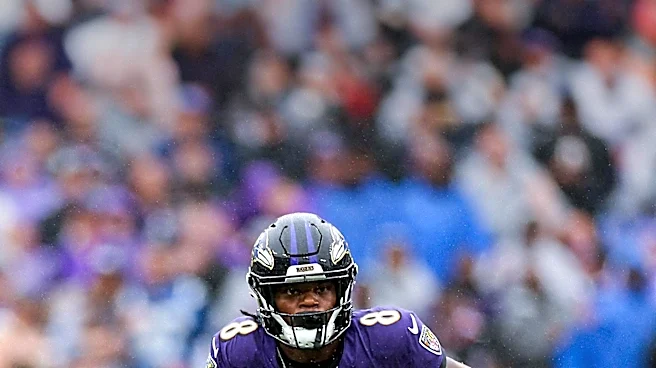
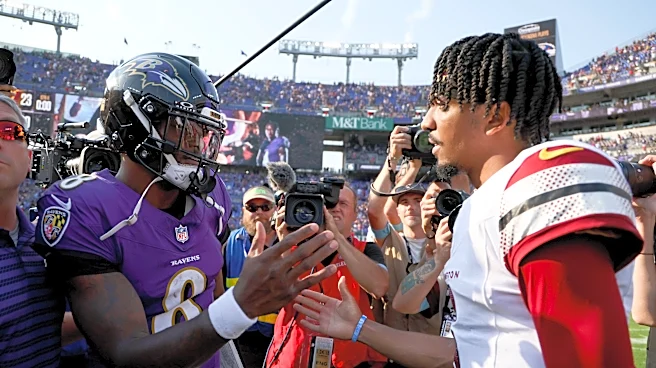
Lamar Jackson's current contract situation is reportedly becoming a major financial concern for the Baltimore Ravens, particularly looking ahead to the 2027 season. Despite having two years remaining on his deal, a recent maximum restructure designed
to free up cap space for the current season has inadvertently given Jackson significant leverage. This restructure is projected to result in an approximate $85 million cap charge for the Ravens in 2027 if no new long-term agreement is reached. Furthermore, Jackson possesses both a no-trade clause and a no-tag clause, severely limiting the team's options. Experts suggest that the Ravens have 'painted themselves into a corner' and will likely need to make Jackson the highest-paid quarterback in the league to mitigate the impending cap hit and secure his long-term future with the team.
Why It's Important?
This situation has profound implications for the Ravens' financial flexibility and long-term roster construction. A projected $85 million cap hit for a single player in 2027 would severely restrict the team's ability to sign other key players, extend existing talent, or acquire new assets through free agency or trades. This could hinder their competitiveness and ability to build a championship-caliber roster around Jackson. The lack of leverage due to the no-trade and no-tag clauses means the Ravens are largely at Jackson's mercy in negotiations. If a new deal isn't struck, Jackson could potentially request a trade or even walk into free agency in 2027, leaving the Ravens with no compensation. This scenario highlights the delicate balance between managing current cap space and planning for future financial stability in the NFL.
What's Next?
The Ravens' general manager Eric DeCosta will face immense pressure to negotiate a new long-term contract with Lamar Jackson before the 2027 season to avoid the massive cap charge. This negotiation will likely involve making Jackson the highest-paid quarterback in the league, as suggested by analysts. The team will need to structure a deal that spreads out bonus money to reduce the annual cap hit. If an agreement cannot be reached, the Ravens could face the difficult decision of trading Jackson or risking losing him for nothing in free agency. The situation will be closely monitored by other NFL teams, as Jackson's health and on-field production in the coming seasons will further influence his market value and the urgency of the Ravens' negotiations.
Beyond the Headlines
This contract standoff exemplifies the growing trend of star quarterbacks commanding unprecedented financial terms in the NFL, often dictating the financial health and strategic direction of their franchises. Jackson's unique negotiating position, secured through his previous deal, underscores the power dynamics between elite players and teams. It also raises questions about the long-term sustainability of such massive contracts within the salary cap structure. The situation could influence how other teams approach contract negotiations with their franchise quarterbacks, potentially leading to more player-friendly clauses. The 'pot-committed' nature of the Ravens' roster, with a payroll nearing $400 million against a $301 million cap, illustrates the tightrope walk NFL teams perform to remain competitive while adhering to financial regulations.