




What's Happening?
Cameco Corporation, a major player in uranium mining and nuclear fuel production, is experiencing a re-evaluation of its investment narrative due to strengthened uranium market fundamentals and long-term supply contracts. The company's integrated position
with Westinghouse Electric Company, coupled with government-backed nuclear cooperation, is significantly influencing its future earnings potential. Analysts are forecasting substantial growth, with revenue projected to reach CA$5.1 billion and earnings CA$2.1 billion by 2029. This positive outlook is based on an anticipated yearly top-line growth of 13.9% and an earnings increase of approximately CA$1.7 billion from the current CA$397.8 million. The focus is on Cameco's ability to convert contracting momentum into stable output and margins, especially given its control over Tier-1 uranium mining reserves in the Athabasca Basin and its B2B business model in nuclear electric power generation.
Why It's Important?
This development is crucial for the U.S. nuclear energy sector and its stakeholders, as Cameco's stability and growth directly impact the supply chain for nuclear fuel. The conditional U.S. Department of Energy loan support for Westinghouse's reactor and fuel projects, in which Cameco has an integrated position, underscores the strategic importance of this relationship for U.S. energy security. Increased contracting visibility and dependable earnings from Cameco could lead to more reliable and potentially more affordable nuclear fuel, benefiting U.S. utilities and consumers. Conversely, operational risks such as potential disruptions at key mining sites or cost pressures from inputs like sulfuric acid could impact the stability of supply and pricing, affecting the profitability of U.S. nuclear power generators and potentially influencing energy policy decisions related to nuclear expansion.
What's Next?
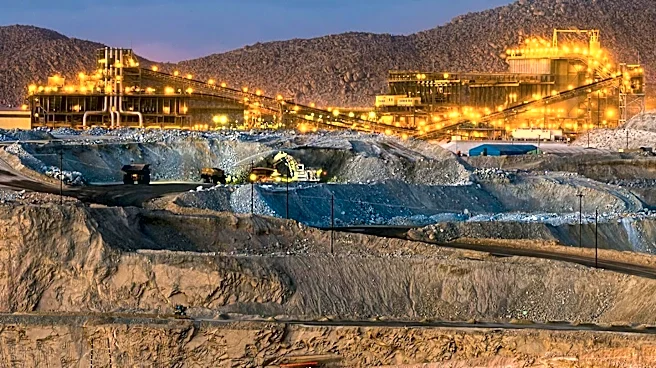
The immediate focus for Cameco will be on execution against its production and delivery plans, particularly as utilities increasingly rely on long-term contracts. The company will need to effectively manage potential operational disruptions at its Saskatchewan assets, including Key Lake, McArthur River, and Cigar Lake, and mitigate cost pressures from inputs. The integration with Westinghouse and the progress of reactor and fuel projects, supported by U.S. government loans, will also be critical to realizing the projected earnings. Investors will be closely watching how Cameco converts its contracting momentum into stable output and margins, which will determine if the anticipated 83% potential upside to its current price materializes. The broader nuclear industry will also monitor Cameco's performance as an indicator of the health and growth potential of the nuclear fuel market.
Beyond the Headlines
The strengthening of Cameco's investment narrative highlights a broader global shift towards nuclear energy as a reliable and low-carbon power source, which has significant implications for U.S. energy policy and climate goals. The emphasis on long-term contracts and government-backed cooperation suggests a strategic effort to secure stable nuclear fuel supplies, reducing reliance on volatile international markets. This could lead to increased investment in domestic nuclear infrastructure and research within the U.S., fostering technological advancements and job creation. Furthermore, the focus on operational reliability and cost management within Cameco's mining operations underscores the environmental and economic challenges inherent in resource extraction, prompting discussions around sustainable mining practices and the long-term environmental impact of nuclear fuel production.