







What's Happening?
Alex Karp, the CEO of Palantir Technologies, has been expanding his real estate portfolio with significant acquisitions. Karp, whose net worth is reported at $14.4 billion, has purchased a variety of properties, including a former monastery in Snowmass,
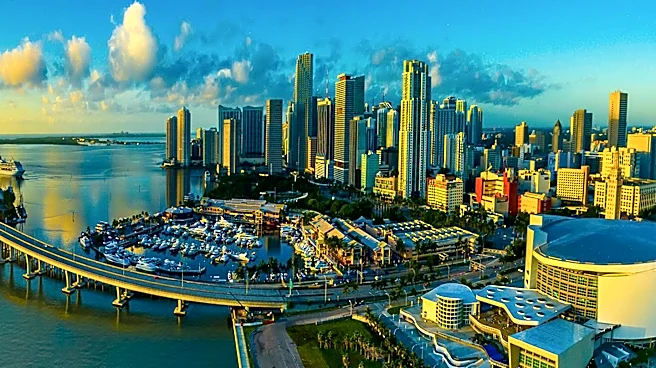
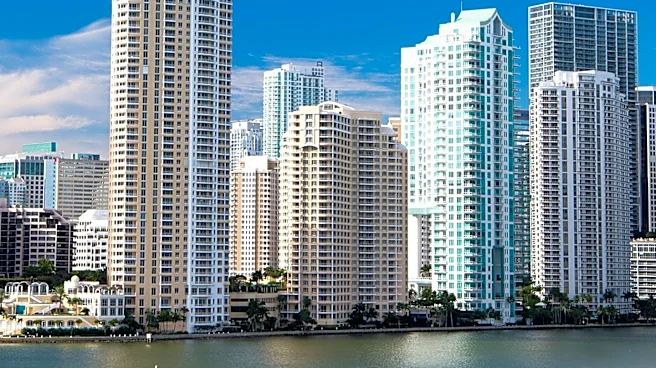
Colorado. This property, acquired for $120 million, spans approximately 3,700 acres and was previously owned by St. Benedict's Monastery. The acquisition is part of Karp's broader strategy of investing in remote and ski-friendly locations. Additionally, Karp has bought a nearly 10,000-square-foot mansion on Miami's San Marino Island for $46 million. These purchases highlight Karp's interest in high-value, exclusive real estate across the United States.
Why It's Important?
Karp's real estate investments reflect a broader trend among tech moguls who are diversifying their assets into luxury properties. This trend can impact local real estate markets, driving up property values and altering community dynamics. Karp's acquisitions, particularly in areas like Snowmass and Miami, could influence regional real estate trends, attracting more high-net-worth individuals to these locations. The purchase of a former monastery also raises questions about the preservation of historical sites and the impact of such transactions on local communities. As tech leaders continue to invest in real estate, these moves could have significant implications for housing markets and urban development.
What's Next?
Karp's continued investment in real estate suggests a potential for further acquisitions, which could influence market trends in other desirable locations. The impact on local economies and real estate markets will depend on how these properties are utilized, whether as private residences or for other purposes. Stakeholders in the real estate industry, including developers and local governments, may need to consider the implications of such high-profile purchases on housing availability and community character. Additionally, there may be increased scrutiny on how these properties are integrated into existing communities, particularly in terms of infrastructure and local services.