







What's Happening?
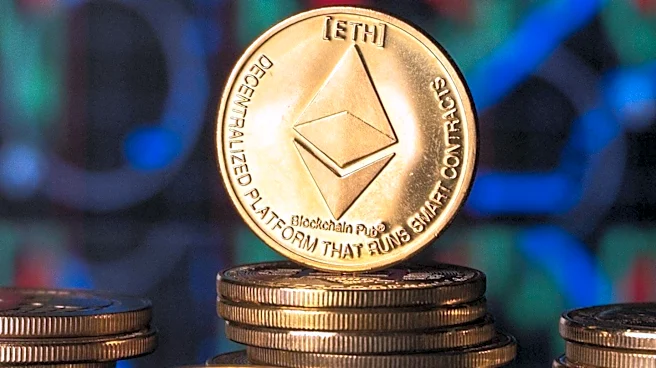
Binance, the world's largest cryptocurrency exchange, suspended withdrawals after a security breach resulted in an estimated $6.3 billion worth of funds being affected. This incident, which occurred on October 29, has brought renewed scrutiny to the cryptocurrency industry's
ability to safeguard digital assets and integrate into mainstream financial systems. The funds drained included Bitcoin, Ether, dollar-backed stablecoins USDT and USDC, and various smaller tokens. Binance has stated that user funds remain safe and has pledged to cover all losses, reserving over $6.3 billion of company funds for this purpose. Approximately $3 billion of the affected assets have been frozen on-chain, and Binance is collaborating with law enforcement and partners to recover additional funds. This hack is the largest publicly known crypto hack to date, surpassing the Bybit exchange incident in February 2025, where attackers stole nearly $1.5 billion.
Why It's Important?
This significant security breach at Binance highlights the inherent vulnerabilities within the decentralized nature of cryptocurrency, which was once considered a major strength. The incident underscores the challenges in protecting digital assets without central authorities to absorb losses, leaving users reliant on fragmented infrastructure. The increasing sophistication of AI models is also noted as a factor enabling hackers to discover and exploit weaknesses more effectively. The ability of stablecoin issuers like Tether and Circle to freeze tokens held at specified addresses, as demonstrated with USDT and USDC in this hack, reveals a centralized control mechanism within certain 'decentralized' assets. This capability, while potentially aiding in recovery efforts, also raises questions about the true decentralization and censorship resistance of these digital currencies. The event could influence regulatory discussions in the U.S. regarding the security and oversight of cryptocurrency exchanges and stablecoins.
What's Next?
Binance is actively working with law enforcement and partners to freeze and recover additional funds, with approximately $3 billion already frozen on-chain. The exchange has committed to covering all losses, utilizing its reserved company funds and purchasing remaining tokens from the market. The ongoing investigation into the breach, with blockchain intelligence firms like TRM Labs, Chainalysis, and Elliptic pointing to North Korea as a likely perpetrator, suggests potential international implications and further efforts to track and recover stolen assets. The incident may prompt other cryptocurrency exchanges to review and enhance their security protocols, particularly concerning hot wallets and cross-chain bridges, which have been identified as common targets for hackers. Regulatory bodies in the U.S. and globally may also intensify their focus on cybersecurity standards within the crypto industry.
Beyond the Headlines
The Binance hack exposes deeper implications beyond immediate financial losses, particularly concerning the evolving landscape of cyber warfare and the role of artificial intelligence. The use of AI by cybercriminals to scan for software weaknesses and design sophisticated attacks lowers the barrier to entry for would-be thieves and accelerates the exploitation of loopholes. This development suggests a future where AI-driven cyberattacks become more prevalent and complex, posing a significant threat to digital infrastructure across various sectors, not just cryptocurrency. The incident also reignites the debate about the balance between decentralization and security in the crypto space. While decentralization offers benefits, the lack of central oversight can create vulnerabilities that malicious actors exploit. The ability of stablecoin issuers to freeze funds, while beneficial in this context, also highlights a potential point of control that could be misused, raising ethical questions about censorship and user autonomy in the long term.