




What's Happening?
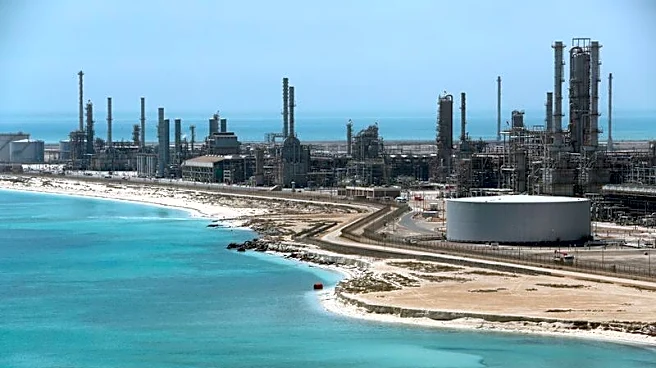
Pakistan has extended an offer to Saudi Arabia to establish commercial oil storage facilities under a tax-neutral bonded storage policy. This initiative, approved by the Economic Coordination Committee, aims to strengthen cooperation in oil storage, refinery
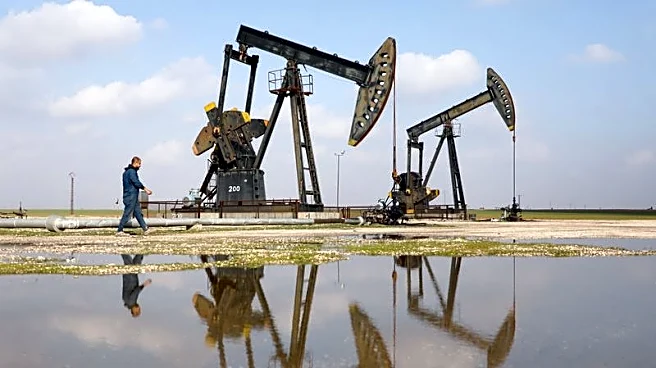
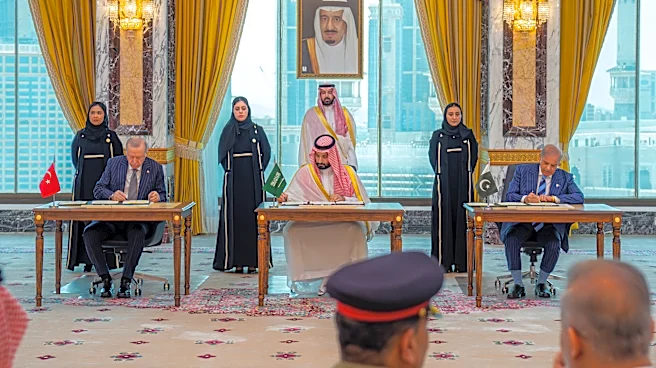
upgrades, and energy security between the two nations. Federal Petroleum Minister Ali Pervaiz Malik presented this offer during a meeting with Saudi Ambassador Dr. Rajeh bin Tami Al-Baqmi. The discussions also covered expanding bilateral cooperation in the minerals, petroleum, and energy sectors. According to the Petroleum Division, these facilities would enable Saudi Arabia to diversify its maritime supply routes, particularly those exposed to risks in the Strait of Hormuz and the Bab el-Mandeb Strait, while simultaneously improving access to Asian markets. Pakistan is also planning a large-scale petroleum storage and refining complex at Hub in Balochistan, designed to accommodate very large crude carriers (VLCCs), further positioning the country as a potential energy corridor for the region.
Why It's Important?
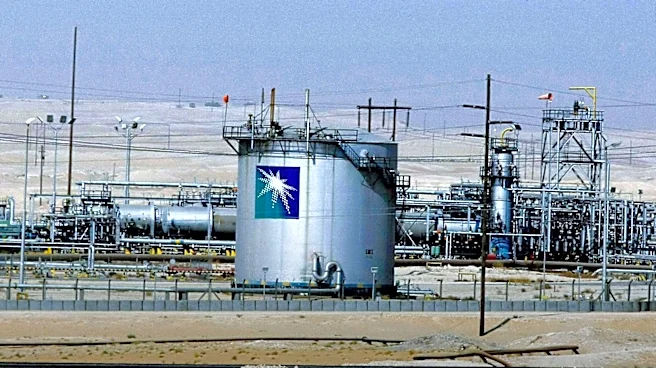
This development is significant for both Pakistan and Saudi Arabia, as it deepens their strategic energy partnership. For Saudi Arabia, the tax-neutral bonded storage policy offers a crucial opportunity to enhance its energy supply chain resilience and expand its market reach into Asia, mitigating geopolitical risks associated with key maritime chokepoints. For Pakistan, hosting these facilities could transform it into a vital energy hub, attracting foreign investment, boosting its refining capabilities, and securing its own energy needs. The proposed Hub complex, capable of handling VLCCs, underscores Pakistan's ambition to become a major player in regional energy logistics. This collaboration also extends to potential additional crude oil supplies from Saudi Aramco and dedicated liquefied petroleum gas (LPG) shipments, which are critical for Pakistan's energy security, especially during peak demand periods in winter. The refinery upgrade program in Pakistan also presents significant investment opportunities for Saudi companies, aiming to modernize infrastructure and meet Euro-V fuel standards.
What's Next?
Following the offer, both countries are expected to continue discussions on the implementation of the tax-neutral bonded storage policy and the establishment of commercial oil storage facilities. Pakistan's Federal Petroleum Minister Ali Pervaiz Malik has invited Saudi Vice Minister for Mining Affairs Khalid Al-Mudaifer to the Pakistan Minerals Investment Forum, scheduled for November 12 and 13 in Islamabad, indicating further avenues for collaboration in the minerals sector. The Saudi ambassador has also announced same-day processing of visa applications for Pakistani citizens, a measure intended to foster business, cultural, and people-to-people ties. These steps suggest a concerted effort to solidify and expand the economic and strategic partnership between Pakistan and Saudi Arabia across various sectors, with energy and minerals being primary focuses.
Beyond the Headlines
The strategic implications of this energy cooperation extend beyond immediate economic benefits. By offering a secure and tax-neutral storage solution, Pakistan is positioning itself as a reliable partner in global energy supply chains, potentially enhancing its geopolitical standing. This move could also contribute to regional stability by diversifying energy routes and reducing reliance on volatile areas. The long-term vision of Pakistan becoming an 'energy corridor' through projects like the Hub complex suggests a fundamental shift in its economic strategy, aiming to leverage its geographical location for greater regional integration and influence. Furthermore, the emphasis on refinery upgrades and Euro-V fuel standards highlights a commitment to environmental responsibility and modernization within the energy sector, aligning with global trends towards cleaner energy practices. The broader defense and energy cooperation framework mentioned by the Saudi ambassador underscores a shared commitment to regional peace and economic development.