









What's Happening?
Walmart and Little Caesars are pioneering the use of drone deliveries in the United States, with plans to expand these operations significantly by 2027. According to Dexa CEO Beth Flippo, drone delivery is seen as a solution to traffic congestion in major
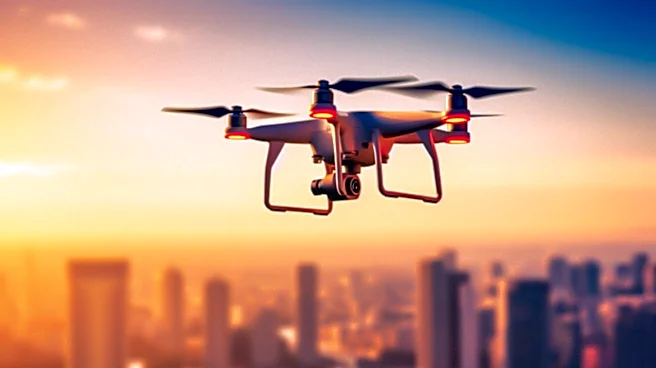
urban centers, offering a fast and efficient way to deliver goods directly to consumers' front doors. The initiative is currently operational in several areas, with plans to extend to seven cities. The drones are designed to operate in urban environments, including apartment complexes, to facilitate easy access for deliveries. The Federal Aviation Administration (FAA) requires a Part 135 Air Carrier and Operation Certification for drones to deliver goods commercially, ensuring safety and airworthiness. Flippo highlighted that the potential for drone deliveries is vast, with projections suggesting they could exceed 800 million by 2034. However, current limitations include the need for more operators to manage multiple drones simultaneously, akin to air traffic control systems.
Why It's Important?
The expansion of drone deliveries by major corporations like Walmart and Little Caesars represents a significant shift in logistics and consumer convenience. This development could revolutionize the delivery industry by reducing traffic congestion and providing faster delivery times, particularly in densely populated urban areas. The move also highlights the growing importance of technology in everyday logistics, potentially setting a precedent for other companies to follow. For consumers, this could mean quicker access to goods and a reduction in delivery costs. For businesses, it offers a competitive edge in the fast-paced delivery market. However, the success of this initiative depends on regulatory approvals and the ability to scale operations efficiently. The broader adoption of drone technology in delivery services could also spur advancements in related fields, such as air traffic management and drone manufacturing.
What's Next?
As drone delivery technology continues to develop, the next steps involve scaling operations and overcoming regulatory hurdles. Companies will need to work closely with the FAA to ensure compliance with safety standards and obtain necessary certifications. The goal is to establish a system where a single operator can manage multiple drones, similar to air traffic control. This would require advancements in technology and infrastructure to support such operations. Additionally, public acceptance and trust in drone deliveries will be crucial for widespread adoption. Companies may also explore partnerships with other businesses to expand their delivery networks and reach more consumers. As the technology matures, it could lead to new business models and opportunities in the logistics and delivery sectors.
Beyond the Headlines
The rise of drone deliveries could have broader implications beyond logistics. It may influence urban planning and infrastructure development, as cities adapt to accommodate drone traffic. There are also potential environmental benefits, as drones could reduce the carbon footprint associated with traditional delivery vehicles. However, there are ethical and privacy concerns related to the use of drones in populated areas, which will need to be addressed through regulations and public discourse. The integration of drones into everyday life could also spur innovation in other sectors, such as emergency services and healthcare, where rapid delivery of supplies is critical.