





What's Happening?
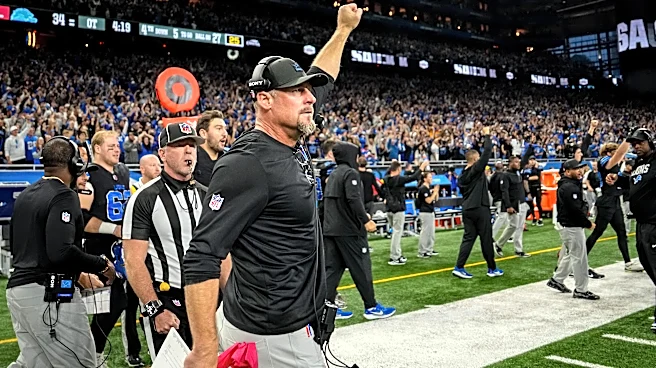
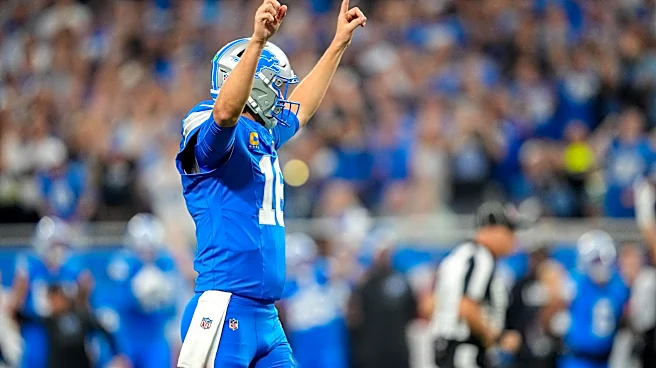
The Detroit Lions' inaugural season in 1934 featured a rare Wednesday night game that drew approximately 12,000 spectators, a significant turnout during the Great Depression. This event, detailed in an October 18, 1934, Detroit Free Press story, saw the Lions defeat
the Boston Redskins 24-0, improving their record to 5-0. The game took place at the University of Detroit Stadium, the team's first home field. This historical context is particularly relevant as the NFL is scheduled to kick off its regular season on a Wednesday night in 2026, a rare occurrence that previously happened in 2012 to avoid a conflict with the Democratic National Convention. The 1934 game underscores the early dedication of Detroit's football fans despite severe economic hardships, with unemployment exceeding 20% nationally and closer to 50% in Detroit.
Why It's Important?
This historical account highlights the deep-rooted connection between the Detroit Lions and their fan base, even during one of the most challenging economic periods in U.S. history. The willingness of 12,000 fans to attend a Wednesday night game in 1934, when disposable income was severely limited, demonstrates the enduring appeal of professional football and its role as a community unifier. This historical context provides a unique perspective on the NFL's scheduling decisions, particularly the rare Wednesday kickoff, and emphasizes the league's evolution from a sport competing with baseball for attention to a dominant cultural force. It also sheds light on the social dynamics of Detroit during the Depression, including the significant contributions of African Americans to the city's culture and sports landscape, despite the unwritten segregation practices in the NFL at the time.
What's Next?
The NFL's decision to schedule a Wednesday night kickoff for the 2026 regular season will likely draw comparisons to these historical precedents, particularly the 1934 Detroit Lions game. This scheduling choice could become a point of discussion regarding the league's flexibility and its efforts to maximize viewership and engagement. For the Detroit Lions, this historical anecdote reinforces their legacy and the loyalty of their fan base, which continues to be a significant aspect of the team's identity. Future discussions around NFL scheduling may reference such historical events to justify or critique deviations from traditional Sunday games, further embedding the 1934 game into the league's narrative.
Beyond the Headlines
The story of the 1934 Detroit Lions game transcends mere sports history, offering a glimpse into the resilience of American communities during times of crisis. It illustrates how sports can provide a sense of normalcy, escape, and collective identity even amidst widespread economic despair. The narrative also touches upon the racial dynamics of the era, with figures like Willis Ward and the eventual integration of the Lions in 1948, highlighting the slow but significant progress in civil rights within professional sports. This historical event serves as a reminder of the complex interplay between sports, economics, and social change, demonstrating how a single game can reflect broader societal struggles and aspirations.