






What's Happening?
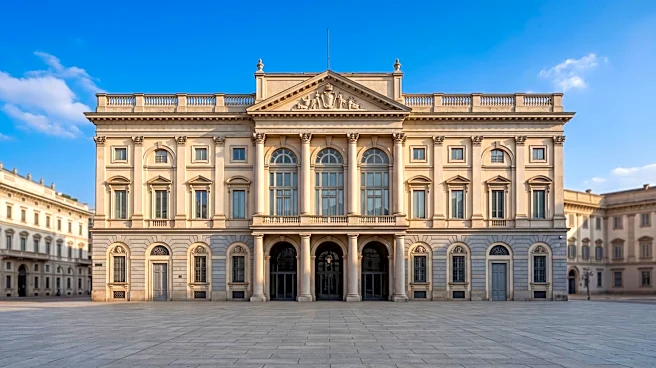
Palazzo Reale in Milan will host an exhibition titled 'The Brueghels. The Origins of Pictorial Genres in Europe,' running from September 29, 2026, to January 31, 2027. This exhibition will explore the artistic legacy of Pieter Bruegel the Elder and subsequent
generations of the Brueghel family, highlighting their significant influence on European painting during the sixteenth and seventeenth centuries. The exhibition will feature works from The Phoebus Foundation collection, including four pieces, alongside art from various international collections. It aims to demonstrate how the Brueghels found inspiration in their surroundings, depicting landscapes, rural life, flowers, animals, and everyday scenes, which gradually led to the emergence of distinct pictorial genres such as landscape and still life painting.
Why It's Important?
This exhibition is significant for art historians and enthusiasts globally, including those in the U.S., as it offers a comprehensive look at a pivotal period in European art history. The Brueghel family's contributions were instrumental in shaping the trajectory of Western art, moving away from purely religious or aristocratic subjects towards more accessible and diverse themes. Understanding the origins of pictorial genres provides crucial context for appreciating later art movements and their development. For U.S. art institutions and collectors, the exhibition offers an opportunity to study the foundational elements of European painting, potentially influencing acquisition strategies, educational programs, and scholarly research. The detailed focus on how artists began to specialize in particular subjects also sheds light on the professionalization of art and the evolving relationship between artists and their patrons.
What's Next?
Following its run at Palazzo Reale, the exhibition's impact will likely extend through scholarly publications, educational programs, and potentially further touring, though the source does not specify additional venues. Art critics and historians will undoubtedly analyze the exhibition's curation and the insights it provides into the Brueghels' influence. The Phoebus Foundation may also continue to promote its collection and research related to the Brueghel family, potentially through new publications like the 'Phoebus Focus' series, which delves into specific artworks. For U.S. audiences unable to attend in person, digital resources, catalogs, and academic discussions will become important avenues for engaging with the exhibition's themes and content, ensuring its lasting educational and cultural impact.
Beyond the Headlines
The exhibition's exploration of the Brueghels' focus on everyday life and natural surroundings reveals a deeper cultural shift in Europe during the Renaissance. This move towards depicting common people, landscapes, and still lifes reflects a growing humanism and an increasing interest in the observable world, rather than solely divine or heroic narratives. This shift laid the groundwork for later artistic movements and contributed to a broader democratization of art, making it more relatable to a wider audience. The Brueghels' detailed and often satirical observations of society also offer a unique historical window into the social customs, economic activities, and daily struggles of the time, providing valuable insights for cultural studies and historical research beyond the realm of art history itself.