






What's Happening?
TJ Maxx, a prominent off-price retailer, is closing select stores across the U.S., leading to viral speculation about financial distress. However, corporate financial filings reveal that these closures are part of a strategic reallocation of capital.
The company is moving away from high-overhead city centers and focusing on high-performing suburban retail hubs. Rather than downsizing, TJX, the parent company, is executing a tactical real estate pivot to adapt to shifting American shopping habits. Over the last fiscal year, TJX expanded its domestic T.J. Maxx storefronts from 1,333 to 1,348, representing a net gain of 15 locations after accounting for closures. The closures primarily targeted expensive urban commercial corridors, such as the three-story flagship on Newbury Street in Boston, Massachusetts, which affected 117 employees. Other affected locations include Silver Spring and Cumberland, Maryland, and Gilbert, Arizona. A spokesperson for T.J. Maxx clarified that these decisions are based on standard operational assessments, not economic emergencies.
Why It's Important?
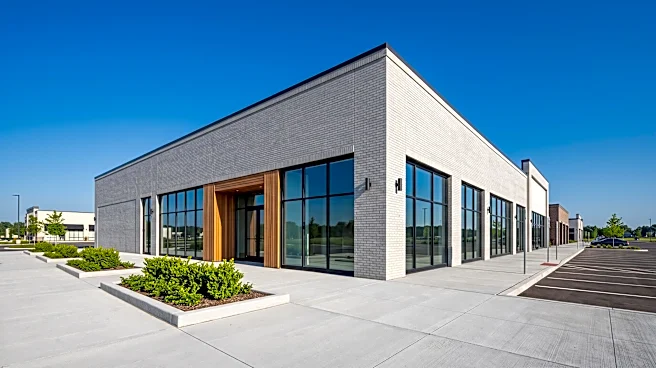
This strategic shift by TJ Maxx is important as it reflects a broader trend in the U.S. retail landscape, where consumer migration patterns are favoring suburban shopping centers over traditional urban flagships. The move indicates that off-price retailers are adapting to changes in foot traffic and operating costs, particularly in the post-pandemic environment where office occupancy rates and downtown activity have fluctuated. By focusing on suburban locations, TJ Maxx aims to capitalize on the 'treasure-hunt' dynamic of off-price retail, which relies on in-person browsing. This strategy allows the brand to capture daily foot traffic in easily accessible, car-friendly plazas while avoiding the high lease terms and logistical challenges of dense urban cores. The company's long-term target of 7,500 worldwide locations across its family of brands, including Marshalls and HomeGoods, underscores its confidence in this expansion model, suggesting a significant impact on the retail real estate market and consumer access to discount shopping.
What's Next?
TJ Maxx is expected to continue its strategy of optimizing its real estate portfolio, which will likely involve further targeted closures in underperforming or high-cost urban areas and continued expansion into suburban markets. This ongoing pivot will reshape the physical footprint of off-price retail across the U.S., potentially leading to more accessible shopping options for suburban consumers. The company's leadership has indicated that strong comparable-store sales growth supports opening new stores closer together without cannibalizing revenue, suggesting a denser presence in key suburban areas. This could also influence other retailers to re-evaluate their own real estate strategies, potentially accelerating a broader migration of retail services to suburban hubs. For consumers, this means that while some familiar urban stores may close, new and potentially more convenient locations will emerge in their communities.
Beyond the Headlines
The strategic real estate adjustments by TJ Maxx highlight a fundamental shift in the economic geography of retail, moving beyond mere financial performance to reflect deeper societal changes. The decline of urban flagships and the rise of suburban retail hubs can be seen as a consequence of evolving work-from-home trends, changing commuting habits, and a re-prioritization of local community-centric shopping experiences. This phenomenon also touches upon the ethical considerations of corporate responsibility during such transitions, particularly regarding employee displacement and the impact on urban commercial ecosystems. While the company frames these actions as strategic growth, the closure of iconic urban stores can alter the character of city centers and affect local economies. The narrative also subtly challenges the perception of 'distress' in retail, demonstrating that closures can be a sign of adaptive strength rather than weakness, as companies strategically re-position themselves for long-term viability in a dynamic market.