



What's Happening?
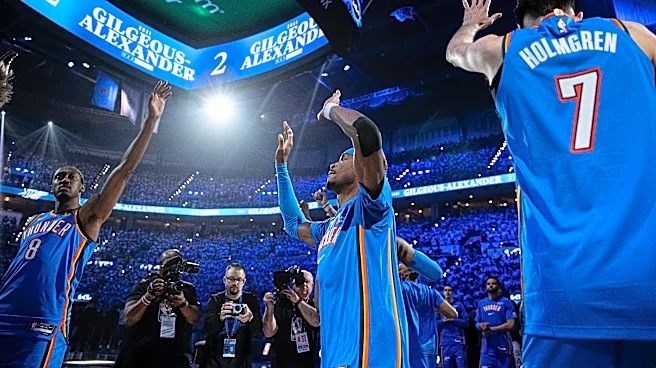
Oklahoma City Thunder coach Mark Daigneault stated that the team's offseason strategy is not solely focused on overcoming the San Antonio Spurs, despite losing to them in Game 7 of the Western Conference finals and the regular-season series. Daigneault emphasized
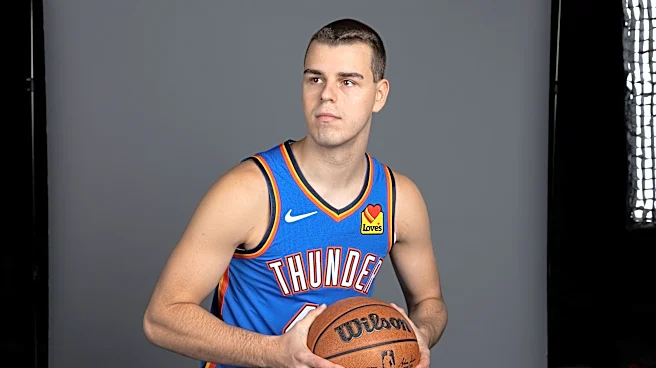
that the Thunder's approach remains consistent: to analyze what worked, what didn't, and what needs to be added or removed from their game. He highlighted the importance of developing a broad strategy that allows the team to be competitive against all opponents, rather than tailoring their entire plan to a single rival. This perspective was shared by player Chet Holmgren, who also indicated that the disappointment from the Spurs series did not alter his offseason training approach.
Why It's Important?
The Oklahoma City Thunder's strategic approach, as articulated by Coach Daigneault, is critical for their long-term success and competitive standing in the NBA. By focusing on a broad, adaptable strategy rather than hyper-targeting a single opponent, the team aims to build a resilient and versatile roster capable of contending against diverse playing styles. This philosophy can foster comprehensive player development and tactical flexibility, which are essential for navigating a demanding 82-game season and the varied challenges of the playoffs. Over-focusing on one rival could lead to strategic tunnel vision, potentially neglecting other aspects of team improvement. This balanced approach impacts player training, roster construction, and in-game adjustments, ultimately influencing the team's ability to achieve consistent high performance.
What's Next?
The Oklahoma City Thunder will continue their offseason and preseason preparations with a focus on their overarching strategy of broad competitiveness. This involves ongoing evaluation of player performance, tactical adjustments, and fostering team cohesion. The coaching staff will implement training regimens and game plans designed to enhance the team's versatility and address areas identified for improvement. While the Spurs remain a significant rival, the Thunder's approach suggests they will prioritize internal development and a flexible game plan that can be applied effectively across the league. The upcoming season will be a test of this philosophy, as the team aims to demonstrate its ability to compete at a high level against all opponents.
Beyond the Headlines
Coach Daigneault's statement about not solely building the team to beat the Spurs reflects a sophisticated understanding of long-term sports management and competitive strategy. It underscores the principle that sustainable success in professional sports often comes from developing a robust, adaptable system rather than reacting to specific past failures. This approach can prevent a team from becoming predictable or overly specialized, which could be exploited by other opponents. The shared sentiment from players like Chet Holmgren further indicates a culture of resilience and continuous improvement within the organization. This strategic mindset is not just about winning games but about building a championship-caliber program that can consistently perform at the highest level, regardless of the immediate competitive landscape.