



What's Happening?
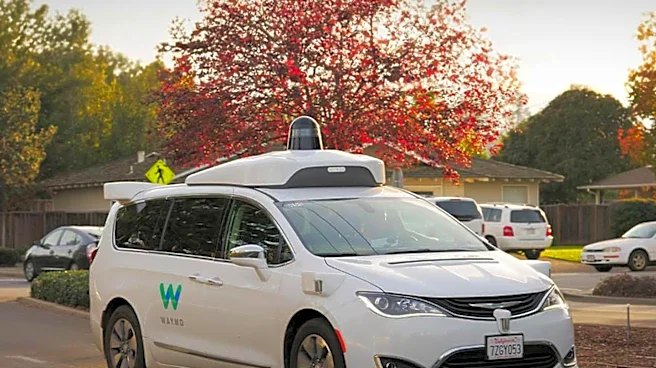
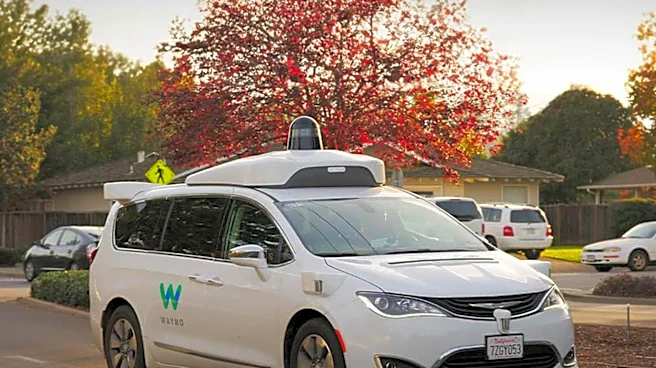
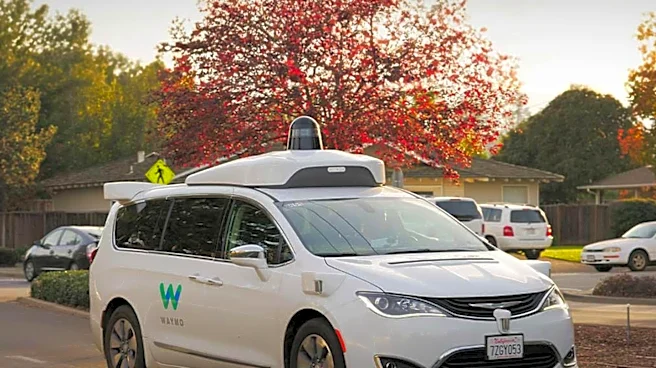
Waymo, the autonomous vehicle company, has been barred by the California Department of Motor Vehicles (DMV) from operating its driverless vehicles on state interstates following a series of freeway incidents. The company has also paused commercial freeway rides
across all its U.S. markets. This decision comes after a November 6 incident where a Waymo vehicle attempted to pass two California Highway Patrol cruisers during a traffic break on Interstate 280, a moving violation. Additionally, between October and November 2026, Waymo reported 11 cases where its vehicles failed to recognize closed freeway lanes due to construction and drove into restricted areas. Earlier in the year, Waymo temporarily halted freeway operations after its robotaxis entered active construction zones in Arizona and California, issuing a recall in June and resuming operations in late July after a software update. However, subsequent violations suggest the recall did not fully resolve the issues. Experts like Phil Koopman, an emeritus professor at Carnegie Mellon University, suggest Waymo is applying 'Band-Aids' rather than addressing fundamental problems in its perception and reasoning systems.
Why It's Important?
The repeated freeway incidents and subsequent restrictions on Waymo's operations highlight significant safety challenges within the autonomous vehicle industry, particularly concerning high-speed environments. While Waymo has logged millions of miles on city streets, the complexities of freeway driving, such as longer stopping distances and the increased fatality risk at higher speeds (60-70 mph), pose a different set of challenges. The inability of Waymo's vehicles to consistently interpret subtle contextual clues, like a police officer's hand gestures or construction zone markings, raises questions about the reliability of current autonomous technology for widespread deployment. This situation impacts public trust in driverless cars and could influence regulatory approaches to autonomous vehicle testing and commercialization. For Waymo, freeway access is crucial for expanding its ride-hailing services to key destinations like airports, and these setbacks could impede its growth and market penetration. The ongoing issues also underscore the debate between rapid scaling by technology companies and the imperative for robust safety measures.
What's Next?
Waymo has stated it is actively working with the California DMV and other state officials to find a solution and resume freeway operations. The company maintains that its ride-hailing service continues to operate safely on surface streets, serving over half a million trips weekly. However, the path forward will likely involve more rigorous testing, further software updates, and potentially increased regulatory oversight. Experts like Phil Koopman advocate for mandatory public transparency from autonomous vehicle companies, suggesting that current traffic tickets and standard fines may not be sufficient deterrents for well-funded technology firms. The industry will be closely watching how Waymo addresses these fundamental issues, as its success or failure in resolving freeway challenges could set precedents for other autonomous vehicle developers and influence the pace of autonomous vehicle adoption across the U.S. The focus will be on whether Waymo can move beyond 'Band-Aid' solutions to implement more comprehensive and reliable fixes for its perception and reasoning systems.
Beyond the Headlines
The challenges faced by Waymo on freeways reveal a deeper tension between the rapid innovation cycles of technology companies and the inherently cautious nature of safety-critical industries. The assumption that freeways would be simpler for autonomous vehicles than urban environments has proven to be a significant miscalculation, exposing the limitations of current AI in handling nuanced, real-world scenarios. The shift towards end-to-end machine learning models, while promising, appears to struggle with subtle contextual clues that human drivers instinctively understand. This raises ethical questions about the deployment of 'good enough' technology under market pressure versus ensuring absolute safety. The incidents also highlight the critical role of regulators in balancing innovation with public safety, especially when dealing with complex systems where the root causes of failures are not always immediately apparent. The long-term implications could include a re-evaluation of autonomous vehicle testing protocols, a greater emphasis on explainable AI, and potentially a slower, more phased rollout of autonomous capabilities, particularly in high-risk driving environments.