



What's Happening?
Across the globe, various cultures practice wellness rituals that emphasize slowing down, presence, and connection, offering alternatives to the fast-paced modern lifestyle. These habits, which are not commercial methods but rather preserved cultural
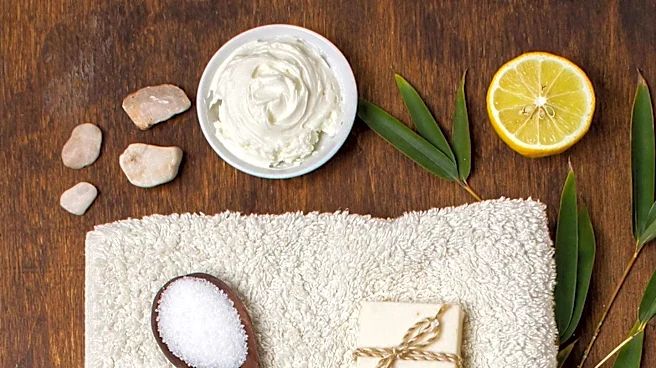
practices, include the Italian 'fare le Vasca' (aimless walking), Finnish 'Hiljaisuus' (the beauty of silence), Japanese 'Shinrin-yoku' (forest bathing), Danish 'Hygge' (the art of feeling at home), Swedish 'Fika' (a deliberate coffee break), Turkish Hammam (body care ritual), Norwegian 'Friluftsliv' (outdoor life), Indian 'Abhyanga' (self-massage), and Moroccan tea rituals (sharing time). Each practice encourages individuals to step away from constant productivity and optimization, fostering well-being through simple, repeatable actions that often involve nature, social connection, or self-care. These rituals highlight that not all time needs to be productive, but rather can be dedicated to presence and the pleasure of ordinary things.
Why It's Important?
The global emphasis on slow living and mindful practices, as exemplified by these wellness rituals, offers a significant counter-narrative to the prevailing culture of constant busyness and digital connectivity in the U.S. This trend is important because it addresses growing concerns about stress, burnout, and mental health in American society. By showcasing practices that prioritize well-being over productivity, these rituals can inspire individuals and communities in the U.S. to adopt similar habits, potentially leading to improved mental and physical health outcomes. The integration of such practices could influence corporate wellness programs, urban planning (e.g., creating more green spaces for 'Shinrin-yoku'), and personal lifestyle choices, fostering a more balanced and fulfilling way of life. It also highlights the value of cultural exchange in discovering new approaches to well-being.
What's Next?
The increasing awareness of these global wellness rituals suggests a growing interest in incorporating slow living principles into daily life. Individuals in the U.S. may continue to explore and adopt these practices, leading to a rise in demand for related services and products, such as mindfulness workshops, nature retreats, and self-care products. Communities might see an increase in initiatives promoting local walking groups, silent spaces, or communal gathering events inspired by 'Hygge' or 'Fika.' The travel industry could also adapt by offering more 'slow tourism' experiences that allow for deeper immersion and less rushed itineraries. Further research into the health benefits of these practices may also emerge, providing scientific backing for their adoption and encouraging broader societal integration.
Beyond the Headlines
The resurgence of interest in slow living and traditional wellness rituals points to a deeper societal yearning for authenticity and connection in an increasingly digital and fragmented world. This movement challenges the capitalist notion that time must always be productive or optimized, instead valuing moments of stillness, reflection, and genuine human interaction. Ethically, it promotes self-care and community well-being as essential, not luxurious, aspects of life. Culturally, it encourages a re-evaluation of what constitutes a 'good life,' moving away from material accumulation towards experiential richness. In the long term, this shift could lead to a redefinition of work-life balance, influencing policies around working hours, vacation time, and the design of public spaces to better support human flourishing and a more sustainable pace of life.