






What's Happening?
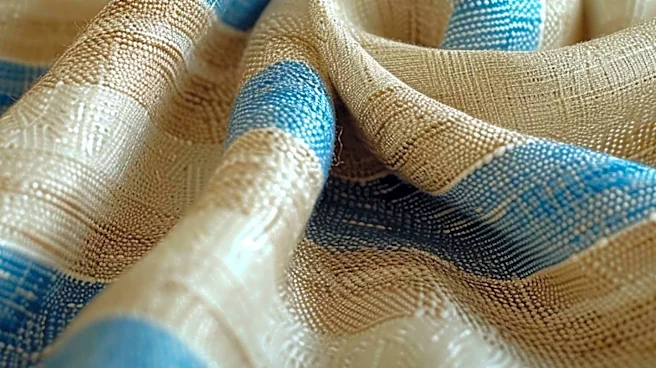
Natural fibers such as wool, cotton, and bast fibers (hemp, flax, jute, ramie) are being rediscovered for their technical prowess and sustainable attributes, increasingly finding applications in high-performance and technical textiles. Innovations like
Nuyarn's twist-free spinning technology enhance merino wool's performance for knitwear, improving elasticity, dry time, and durability. SolucellAir, a patented yarn technology by BYR International, transforms cotton into a performance fiber by dissolving a filament yarn to create a hollow-core structure, enhancing moisture management and thermoregulation. Bast fibers, particularly hemp, are gaining traction due to their eco-friendly nature, strength, and absorbency, with companies like Panda Biotech leading the resurgence of American-grown hemp for textile applications following the 2018 Farm Bill.
Why It's Important?
This resurgence of natural fibers is significant for the U.S. textile industry and its consumers. It offers a sustainable alternative to fossil-fuel-based synthetics, addressing growing environmental concerns related to microplastics and chemical treatments. For U.S. manufacturers, it presents opportunities to innovate and differentiate products, potentially reducing reliance on imported synthetic materials and strengthening domestic supply chains, particularly with the legalization of industrial hemp cultivation. Consumers stand to benefit from high-performance textiles that are not only durable and functional but also eco-friendly and biodegradable. This shift can also stimulate agricultural sectors involved in growing these natural fibers, contributing to economic diversification and rural development.
What's Next?
The trend of integrating natural fibers into technical textiles is expected to continue, driven by ongoing research and development. Future efforts will likely focus on further enhancing the performance attributes of these fibers, improving processing technologies to make them more cost-effective, and expanding their applications across various sectors, including automotive, medical, and outdoor apparel. The infrastructure for growing and processing fibers like hemp in the U.S. will continue to develop, aiming for improved price parity with synthetics. Collaboration between fiber producers, textile manufacturers, and brands will be crucial to bring these innovative natural fiber products to market at scale.
Beyond the Headlines
The deeper implications of this natural fiber renaissance are profound, touching upon environmental sustainability, economic resilience, and cultural heritage. Environmentally, it signifies a move towards a more circular economy, reducing waste and pollution associated with synthetic materials. Economically, it can foster new industries and job creation in agriculture and manufacturing, particularly in regions with suitable climates for growing these fibers. Culturally, it reconnects modern textile production with traditional practices, valuing natural resources and craftsmanship. This shift challenges the long-held dominance of synthetics in performance wear, suggesting a future where advanced textiles are not only high-performing but also inherently sustainable and regenerative, aligning with a broader societal demand for responsible consumption and production.