








What's Happening?
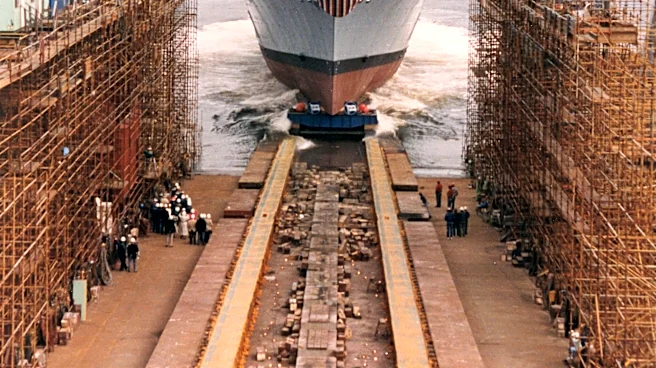
Germany has decided to cancel its F126 frigate program, opting instead to purchase eight smaller Meko A-200 frigates from the German company TKMS. This decision marks a significant shift in Germany's naval strategy, as the F126 program was set to be the largest
warship commission since World War II. The cancellation has led to a substantial drop in defense stocks, with Rheinmetall, a major beneficiary of German government contracts, experiencing a 17.3% decline in its stock value. The decision comes amid a broader downturn in European defense stocks, as investors reassess the potential for government military spending in light of geopolitical developments.
Why It's Important?
The cancellation of the F126 frigate program has significant implications for the defense industry, particularly for companies like Rheinmetall that were poised to benefit from the project. The decision reflects a shift in Germany's defense strategy and raises questions about the future of military spending in Europe. The move could impact the broader defense sector, as it signals potential changes in government priorities and spending commitments. This development is crucial for stakeholders in the defense industry, as it may influence future contracts and investment strategies.
What's Next?
The German government's decision to cancel the F126 program and opt for smaller frigates may lead to further strategic adjustments in its defense policy. Stakeholders in the defense industry will likely monitor the situation closely to understand the implications for future contracts and investments. The decision may also prompt discussions within the European defense community about the allocation of resources and the prioritization of military projects. Companies affected by the cancellation may seek to adapt their strategies to align with the new direction of Germany's defense policy.