





What's Happening?
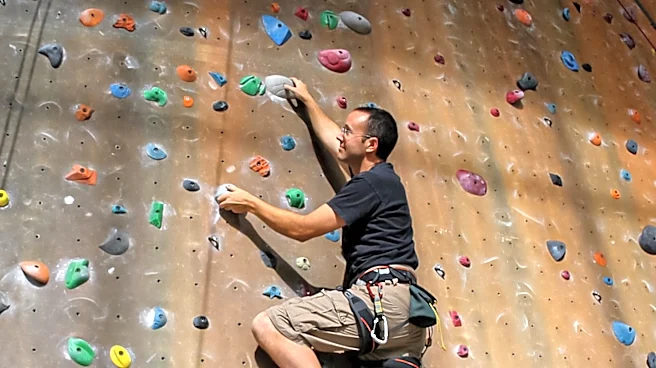
Sockwell, a company specializing in socks, is promoting its Merino wool blend options as a solution for common foot problems experienced by rock climbers. These issues include rubbing, toe pressure, sweaty feet, and blisters, which can arise from the
tight fit of climbing shoes and extended climbing sessions. The company emphasizes that wearing thin, fitted socks can significantly improve comfort, manage moisture, and reduce friction. Sockwell's recommended products, such as the Men's Elevate Quarter, Women's Journey Quarter, and Men's Pulse Quarter compression socks, are designed with features like snug fits, smooth toe construction, minimal cushioning, and moisture-managing materials to address these concerns. The brand suggests that while the 'no-sock' approach is popular for a close feel, socks can be beneficial for those experiencing foot sensitivity, moisture, or odor, particularly during long gym sessions, crack climbing, or for beginner climbers.
Why It's Important?
The focus on specialized rock climbing socks by Sockwell underscores a growing recognition within the sports and outdoor gear industry of the importance of comfort and performance for athletes. For U.S. consumers engaged in rock climbing, this development means access to products specifically engineered to mitigate common discomforts, potentially enhancing their climbing experience and reducing the risk of foot injuries like blisters. This trend also highlights the broader market for niche athletic wear, where companies are innovating to meet the specific demands of various sports. For businesses like Sockwell, it represents an opportunity to capture a segment of the activewear market by offering targeted solutions. The emphasis on Merino wool blends also points to a consumer preference for natural, high-performance materials that offer breathability and moisture management, influencing material choices across the athletic apparel sector.
What's Next?
As awareness of specialized athletic wear grows, other brands may follow suit by developing or enhancing their own lines of climbing-specific socks, leading to increased competition and innovation in the market. Consumers can expect to see more options that prioritize features like moisture-wicking, compression, and anatomical fit for various climbing disciplines. Retailers catering to outdoor sports and athletic gear will likely expand their inventory to include these specialized products, making them more accessible to climbers. Furthermore, as the rock climbing community continues to expand in the U.S., there may be a greater demand for educational content and product recommendations that guide climbers in making informed choices about their gear, including socks, to optimize performance and comfort.
Beyond the Headlines
The seemingly minor detail of choosing the right socks for rock climbing touches upon broader themes of human-gear interaction in high-performance activities. It highlights how even small components of an athlete's kit can significantly impact their physical well-being and overall performance. This micro-focus on comfort and injury prevention reflects a maturing understanding of sports science, where marginal gains from optimized equipment can lead to substantial improvements in endurance and skill development. Ethically, it also speaks to the responsibility of manufacturers to provide products that genuinely enhance user experience and safety, moving beyond generic solutions to address specific athletic challenges. Culturally, the increasing specialization of gear for sports like rock climbing indicates a deepening engagement with these activities, where participants are willing to invest in tailored solutions for a more fulfilling and comfortable experience.