






What's Happening?
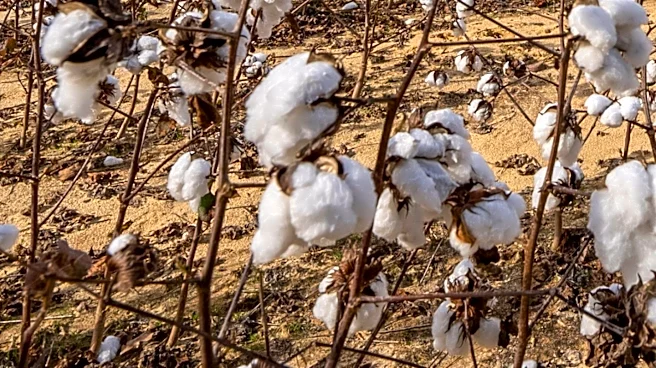
The cotton industry in Xinjiang, China, has reported record-high yields despite experiencing the hottest summer since 1961 and facing external pressure from U.S. sanctions. A demonstration cotton field in Changji achieved an average seed cotton yield of
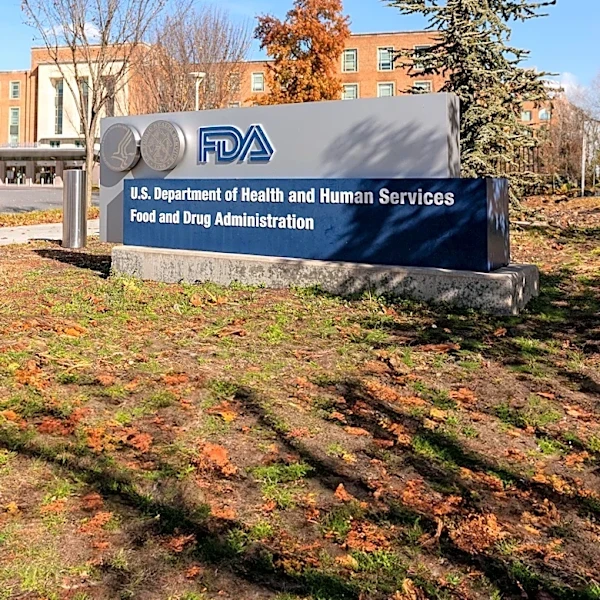
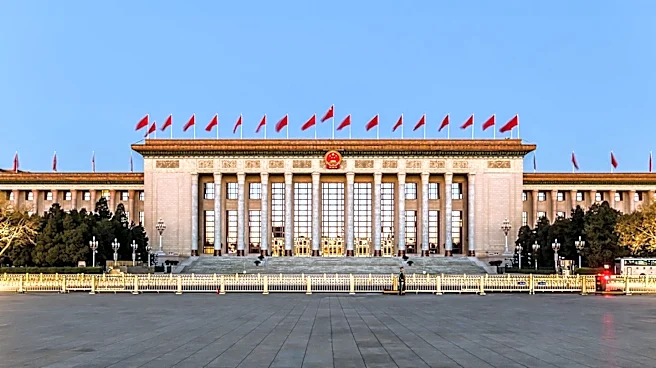
9 tonnes per hectare. This success is attributed to advanced mechanization, with a 97% rate across plowing, sowing, and harvesting, and the integration of smart technologies like drones and AI-powered machines. The region's cotton yield is projected to reach 173.8 kilograms per mu, surpassing the national average and accounting for 95.9% of China's total cotton output. This resilience is further bolstered by a comprehensive industrial chain that includes local processing from planting to garment-making, with 45% of cotton processed locally in 2025. The U.S. Department of Homeland Security recently added three Chinese entities to the 'Uyghur Forced Labor Prevention Act Entity List,' which China strongly condemns.
Why It's Important?
This development highlights the increasing technological sophistication and self-sufficiency of China's agricultural sector, particularly in Xinjiang. The ability to maintain high output despite adverse climate conditions and international sanctions demonstrates a significant advancement in agricultural science and technology. For the U.S., this indicates that sanctions aimed at disrupting Xinjiang's cotton exports may not be achieving their intended effect of significantly impacting production. Instead, these measures appear to be accelerating China's efforts to create a self-sufficient and technologically advanced manufacturing system. The ongoing dispute over 'forced labor' allegations and the U.S. sanctions continue to strain trade relations and global supply chains, particularly in the textile industry. The resilience of Xinjiang's cotton industry could lead to a re-evaluation of the effectiveness of such sanctions and their broader geopolitical implications.
What's Next?
China is expected to continue investing in smart agricultural technologies and further integrating its cotton industrial chain to enhance resilience against external pressures. The region plans to develop industries of high-count combed yarn, home textiles, and technical textiles during the 15th Five-Year Plan period (2026-2030). The U.S. may face continued challenges in enforcing the 'Uyghur Forced Labor Prevention Act' as Xinjiang's industry adapts and strengthens. The China Cotton Association has stated that China's cotton industry has the confidence and capabilities to overcome challenges, citing its complete industrial chains, vast domestic consumer market, and diversified international market layout. This ongoing situation will likely lead to further diplomatic exchanges and potential adjustments in trade policies from both sides.
Beyond the Headlines
The narrative surrounding Xinjiang cotton extends beyond economic and trade issues, touching upon complex ethical and human rights concerns. The U.S. 'forced labor' allegations are a significant point of contention, with China consistently denying these claims and presenting evidence of advanced mechanization. The success of Xinjiang's cotton industry in the face of these allegations raises questions about the efficacy and unintended consequences of sanctions. It also underscores a broader global trend where technological advancements in agriculture and manufacturing can mitigate the impact of external pressures. The development of a traceable, full-industrial-chain system, where the origin and processing of cotton can be tracked, could become a critical factor in future debates about ethical sourcing and supply chain transparency, potentially setting new standards for global industries.