
What's Happening?
Walmart has integrated its shopping and checkout functionalities directly into Meta’s Muse, an AI assistant, allowing customers to find products, build baskets, and complete purchases without leaving the
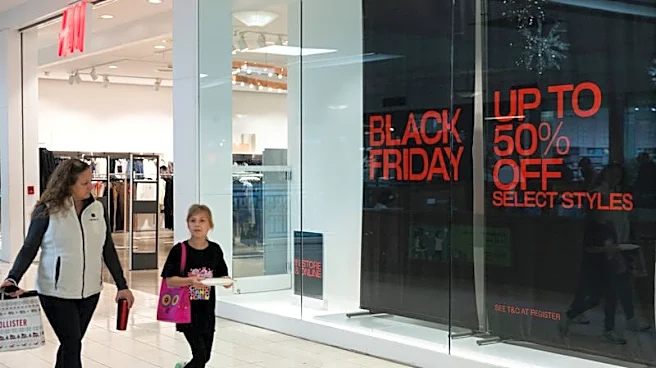
conversation. This integration, launched on November 24, 2026, includes Walmart’s Black Friday offers. The system operates through Walmart’s Agent Gateway, which connects external AI assistants to its online store. When a customer makes a shopping request through Muse, the AI assistant relays the list to Walmart via the gateway, and Walmart then identifies matching products. Muse assists shoppers in exploring options and assembling their carts, including searching for specific items or checking delivery availability for deals. To get started, shoppers must sign into their Walmart account through Muse and create an Agent Profile the first time they add an item to their cart. This profile allows customers to set spending limits and require approval for purchases.
Why It's Important?
This collaboration between Walmart and Meta’s Muse represents a significant advancement in conversational commerce and AI-driven shopping experiences. For U.S. consumers, it offers a more streamlined and convenient way to shop, potentially reducing friction in the online purchasing process, especially during high-volume shopping events like Black Friday. For Walmart, it expands its reach into new digital channels and leverages AI to enhance customer engagement and sales. The Agent Gateway infrastructure is crucial, as it allows Walmart to maintain control over product matching and pricing while enabling external AI assistants to facilitate the shopping journey. This move could set a precedent for how other retailers integrate with AI platforms, pushing the boundaries of e-commerce and personalizing the shopping experience. It also highlights the growing importance of AI in retail strategy and customer interaction.
What's Next?
Walmart plans to integrate more apps and agents through its Agent Gateway, indicating a strategic move towards a more interconnected and AI-powered retail ecosystem. This suggests that consumers can expect more AI assistants to offer direct shopping capabilities from various retailers in the future. The success of this initial integration with Meta’s Muse, particularly during the critical Black Friday period, will likely influence the pace and scope of these future expansions. Furthermore, the emphasis on customer-controlled permissions, such as spending limits and purchase approvals within the Agent Profile, suggests an ongoing focus on balancing convenience with security and user autonomy in AI-driven commerce. The development could also spur innovation in AI assistant capabilities, as platforms compete to offer more seamless and secure shopping experiences.
Beyond the Headlines
The integration of Walmart’s shopping capabilities into Meta’s Muse signifies a deeper trend towards ambient commerce, where purchasing decisions and transactions become embedded within everyday digital interactions. This development raises important questions about data privacy, as AI assistants will handle more personal shopping preferences and transaction data. Walmart’s promise that the gateway helps agents find relevant products without sharing a customer’s broader purchase history with others is a critical aspect of building trust in this new paradigm. The ability to set spending limits and review purchase history through the Agent Profile also addresses concerns about autonomous AI purchasing. This shift could fundamentally alter consumer behavior, making shopping more intuitive but also requiring greater awareness of how personal data is used and protected in these AI-driven environments. It also underscores the increasing convergence of social media, AI, and e-commerce.