




What's Happening?
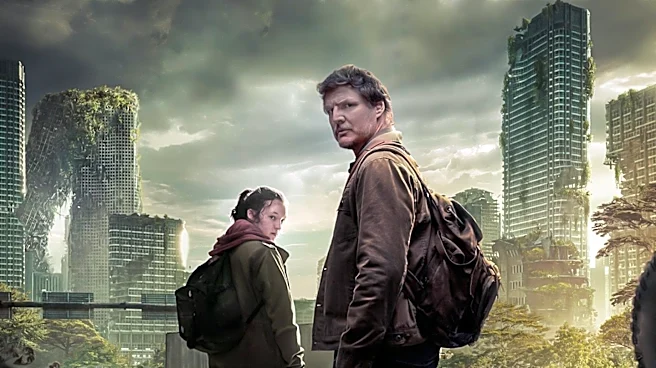
Prestige television shows are increasingly finding critical and award-winning success by adapting the 'optional' or 'side quest' content from video games, rather than strictly adhering to main storylines. This trend is exemplified by HBO's adaptation
of 'The Last of Us,' where Nick Offerman won an Emmy for an episode largely based on the game's optional backstory for characters Bill and Frank. Similarly, the 'Fallout' series draws heavily from the environmental storytelling and lore found in the game's periphery, such as Cooper Howard's transformation into The Ghoul. 'Arcane,' based on 'League of Legends,' builds its emotional core from character backstories that are often just lore blurbs in the game. Even 'Cyberpunk 2077's' anime tie-in, 'Edgerunners,' adapts the mood and implications from the game's scattered text fragments rather than a direct plotline. These adaptations highlight how TV is recognizing and elevating the rich, often overlooked, narrative depth embedded in video game side content.
Why It's Important?
This trend signifies a significant shift in how video game narratives are perceived and utilized by the television industry, particularly in the U.S. It demonstrates that the depth of storytelling in video games extends far beyond their main plots, offering a wealth of material for compelling character development and world-building. For the U.S. entertainment industry, this opens new avenues for adaptation, moving beyond direct plot translations to explore the nuanced lore and emotional subtexts that resonate with audiences. It also validates the work of game writers who craft these 'optional' narratives, potentially leading to greater recognition and investment in this aspect of game development. This approach can attract a broader audience to game adaptations, including those unfamiliar with the source material, by focusing on universal themes and character-driven stories, thereby expanding the market for both gaming and television content.
What's Next?
This successful strategy is likely to encourage more television producers and writers to delve deeper into the optional content of video games for future adaptations. We can expect to see a continued focus on character backstories, environmental lore, and side narratives that offer rich emotional and thematic depth. This could lead to a new wave of game adaptations that are less constrained by the main game's plot and more focused on exploring the expansive universes games create. Game developers might also be influenced to invest more in the quality and depth of their optional content, knowing it could become a valuable asset for future transmedia projects. This trend could also spark discussions within the gaming community about the value and recognition of 'flavor text' and side quests, potentially leading to new ways of presenting or highlighting these elements within games themselves.
Beyond the Headlines
The success of TV adaptations leveraging video game side quests reveals a fascinating insight into narrative consumption and the nature of storytelling across different media. It suggests that games, by their interactive nature, often 'bury' some of their most profound narratives in optional content, allowing players to discover them at their own pace or even miss them entirely. Television, as a linear medium, can then unearth and foreground these hidden gems, giving them the spotlight they might not receive in their original interactive format. This raises ethical and creative questions about authorship and credit, as the original game writers often go uncredited for the material that forms the emotional backbone of award-winning TV shows. It also highlights a potential disconnect between how games are designed for player agency and how their stories are best consumed for passive viewing, suggesting a rich area for future interdisciplinary study and collaboration.