


What's Happening?
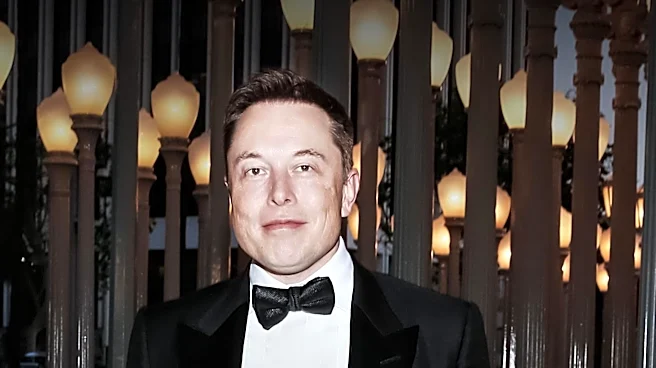
Elon Musk stated on Wednesday that a merger between Tesla and SpaceX would likely be beneficial, but emphasized that such a merger should not automatically trigger his performance-based stock awards from Tesla. Speaking at The New York Times’ DealBook
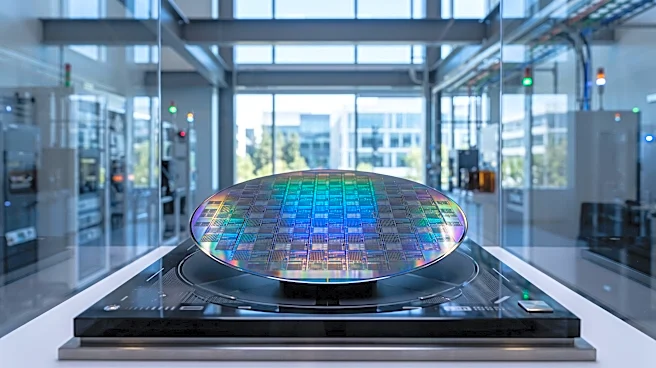
Summit, Musk explained that advances in AI, robotics, and chip design have created new synergies between the two companies that were not apparent five years ago. Both Tesla and SpaceX are involved in AI development, with Tesla focusing on self-driving cars and its Optimus robot, and SpaceX building large AI models and providing computing power. They also collaborate on Terafab, a chipmaking venture aiming to produce its first test chip by mid-2027. Musk clarified that his Tesla stock awards are tied to Tesla's performance metrics, not merely a merger. He noted that any merger would require shareholder votes and that his own vote would consider the financial terms for other SpaceX investors. Committees of independent directors have been formed by both companies to explore a potential deal, with an announcement possibly coming as early as December or in early 2027.
Why It's Important?
A potential merger between Tesla and SpaceX could significantly reshape the technology and automotive landscapes, creating a conglomerate with vast capabilities in AI, robotics, space exploration, and advanced manufacturing. This integration could lead to accelerated innovation by combining their respective strengths in chip design, AI models, and manufacturing processes. For shareholders, the creation of a more diversified and technologically advanced entity could unlock substantial value, though the terms of any merger and its impact on existing stock valuations would be critical. Musk's insistence that his Tesla pay package remain tied to performance, even in the event of a merger, highlights a commitment to shareholder value and operational excellence within Tesla. This stance could influence how future executive compensation packages are structured in large-scale corporate integrations, particularly in the tech sector. The move also signals a strategic pivot for Musk, indicating a belief that the combined entity could achieve greater market dominance and technological breakthroughs than either company could individually.
What's Next?
The immediate next steps involve the independent director committees of Tesla and SpaceX continuing their exploration of a potential merger. An announcement regarding the feasibility or terms of a deal could emerge by December or early 2027. Should the committees recommend a merger, it would then be subject to shareholder votes from both companies, a process that could be complex given the differing investor bases and valuations. Stakeholders, including investors, analysts, and competitors, will closely monitor these developments for any indications of the merger's structure, potential synergies, and financial implications. Regulatory bodies may also scrutinize any proposed merger for antitrust concerns, given the significant market influence of both companies. The outcome will also set a precedent for how large, interconnected tech enterprises navigate growth and integration, especially concerning executive compensation in such scenarios.
Beyond the Headlines
The discussion around a Tesla-SpaceX merger extends beyond immediate financial and operational considerations, touching upon broader themes of corporate synergy in the age of advanced technology. The convergence of AI, robotics, and space technology under a single umbrella could create a powerful entity capable of driving unprecedented innovation across multiple sectors. This move could also redefine the competitive landscape, potentially challenging established players in various industries. Ethically, the concentration of such vast technological power and influence under one leadership raises questions about market dominance, data control, and the societal impact of integrated AI and space capabilities. Legally, the complexities of merging two distinct, high-value public and private entities, especially concerning shareholder rights and regulatory approvals, will be a significant undertaking. Culturally, it represents a bold vision of vertical integration in technology, where diverse, cutting-edge fields are brought together to achieve ambitious, long-term goals, potentially setting a new paradigm for corporate structure in the 21st century.